Best Milk Frother for Oat Milk in 2026: Which of These 8 Fits?
We researched 263,000+ owner ratings to find the best milk frother for oat milk. Eight 2026 picks from $14.99 to $249.95 for latte and cold-foam drinkers.
By the CoffeeGearGuides team · USA · Updated Jul 25, 2026 · 33 min read
On this page20
The best milk frother for oat milk is the one that makes the texture you actually drink, not the biggest pile of bubbles.
Most buyers are choosing between a jug that heats while it spins and a texture tool that leaves heat and movement in their hands.
Oat milk turns that hardware choice into a formula-and-texture problem. One carton can become glossy and pourable, while another turns into large bubbles that vanish in coffee.
For 2026, we compared manufacturer manuals, independent tests, owner reports, and 263,387 live Amazon ratings. We also checked every product through Amazon's product API for US stock and price.
We did not conduct hands-on tests. Our job here is to connect verified specifications and repeated owner patterns to the drink you want to make.
How we chose these milk frothers for 2026
CoffeeGearGuides is research-driven. Our research and editorial method explains how we use manuals, expert testing, owner feedback, and live retail data without pretending we used every product.
We started with oat-milk evidence, not a generic bestseller list. A machine earned more weight when a credible tester used plant milk or its maker documented non-dairy behavior.
We then read beyond the happy first week. Three-star reviews, repair threads, replacement-part questions, and manufacturer troubleshooting pages reveal what a five-line listing does not.
Whisks that lose drive, coatings that collect cooked milk, batteries that fade, and jugs that demand too much minimum fill all changed the order.
Every final pick was in stock with a live US price. Every one also cleared the owner's 4.0-star gate with its exact Amazon rating and review count checked on July 22, 2026.
Three candidates scoring from 3.5 to 3.7 stars were removed. A long feature list could not outweigh a weak owner record for a simple appliance.
The eight survivors also needed separate jobs. We kept a compact one-button cup, a true texture tool, two large jugs, a premium induction model, and an honest $14.99 entry point.
Best milk frother for oat milk by texture
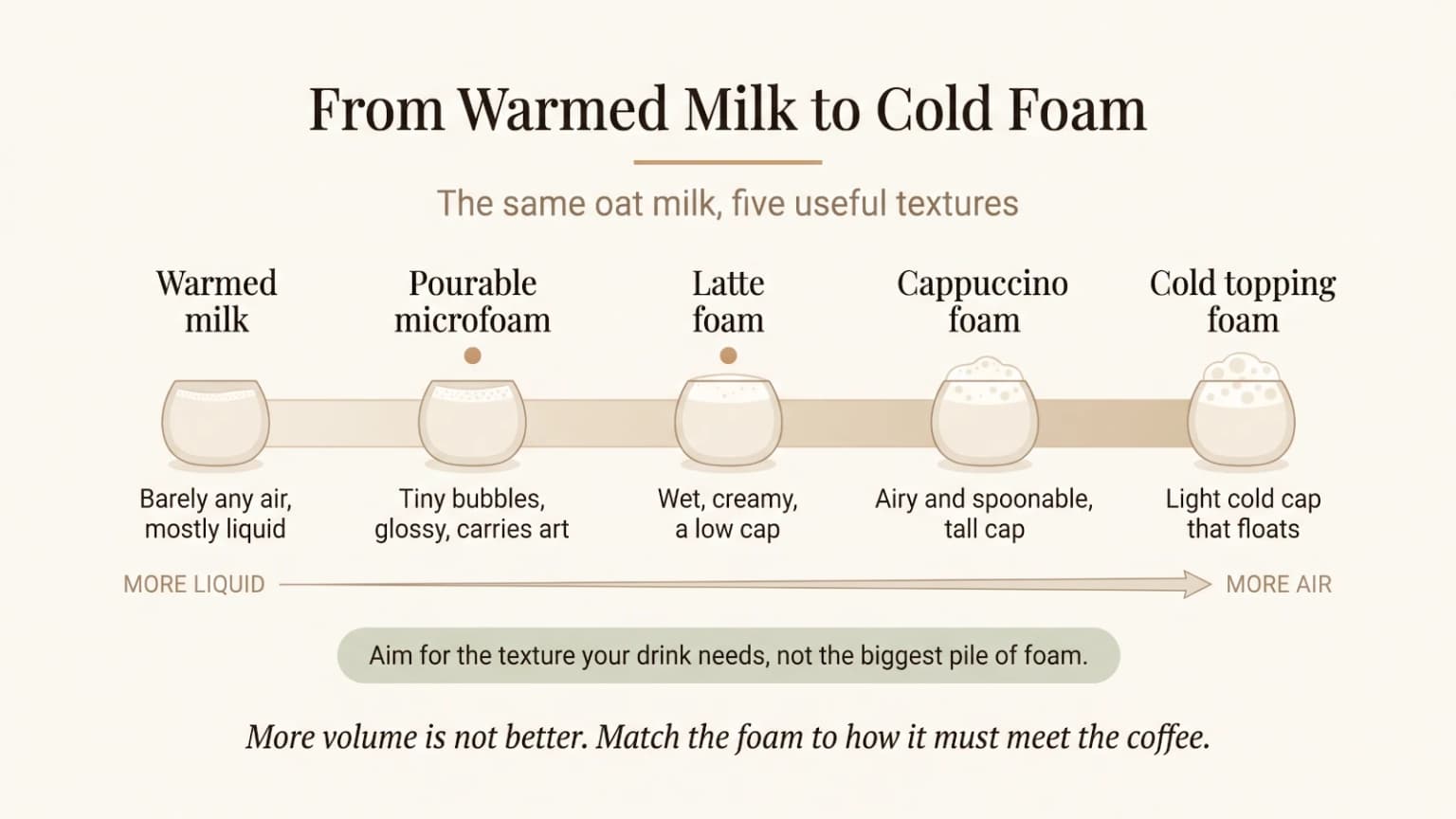
Start with the finished drink. A flat white needs glossy milk that moves as one liquid, while an iced coffee may need a distinct cold cap that floats.
Those are not different heights of the same foam. They are different balances of air, liquid drainage, bubble size, and pourability.
Choose the texture target first, then buy the least complicated device that can repeat it.
More volume is not automatically better. The useful target depends on how the oat milk must move when it meets coffee.
At one end sits microfoam, a liquid filled with bubbles too small to feel separate. It gives a latte body and can carry simple art.
In the middle is wet latte foam. It pours easily, keeps a creamy cap, and is the most forgiving result for automatic jugs.
At the airy end is spoonable foam. It suits cappuccino and cold toppings, but it can leave thin liquid behind if the whisk adds air faster than it integrates it.
Match the frother to the oat drink
Match the frother to the oat drink
Drink and texture
Feature that matters
Flat white, glossy and fluid
Screen impeller or fine texture control
Latte, creamy with a low cap
Light-foam mode or gentler frothing disc
Cappuccino, tall and spoonable
Coil whisk with room for expansion
Iced coffee, separate cold cap
Dedicated cold cycle and chilled carton
Hot chocolate, mostly liquid
Heating disc or mix-in-safe program
The same barista oat milk can serve several drinks, but no single setting creates every texture well.
An automatic heating jug has the highest floor. Add cold milk, press a control, and accept the texture programmed into its whisk speed and cycle.
The NanoFoamer has the highest ceiling in this list. It also asks you to control temperature, depth, angle, and the handoff from adding air to blending bubbles.
A basic handheld wand is different again. It excels at a quick bubbly cap and mixing powders, but its open coil is not a shortcut to steam-wand microfoam.
8 best milk frothers for oat milk
The ranking favors useful oat texture, owner confidence, cleanup, and value. Premium controls earn their place only when they solve a problem a simpler pick cannot.
Prices below were live when Amazon's API verified all eight listings. The site's price layer can show newer offers after publication.
No rating here predicts how your exact carton will behave. It does show which products have survived enough ordinary kitchens to deserve closer attention.
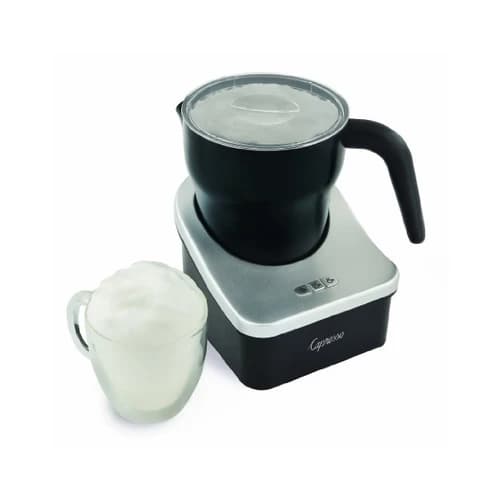
1. Capresso Froth Pro
The Capresso Froth Pro takes first place because it solves the common oat-milk problem without charging for controls most people will never use.
Model 202.04 uses a snap-in disc and a removable pitcher. Independent testing found unusually fine alternative-milk texture, with a 4 oz start and an 8 oz frothing limit.
Capresso Froth Pro (202.04)
Rated 4.3 from 3,997 ratings
A removable-pitcher frother with hot, warm, and cold controls, plus separate discs for frothing and heating.
At the time of writing, 3,997 Amazon ratings average 4.3 stars. That is a reassuring record for an appliance whose basic design has been sold for years.
The most useful middle-rated reviews praise easy operation but describe inconsistent foam thickness. Some also report a handle problem or a jug that still heats after the disc stops making useful froth.
That pattern makes the removable disc the honest weak point. It must snap fully into place, stay free of oat residue, and keep enough magnetic drive to spin under load.
Capresso sells extra pitchers and discs, which is better than treating the whole appliance as disposable. The drive inside the base is not a user-serviceable part, however.
Buy this for one or two lattes, cappuccinos, or iced oat drinks when you want strong texture with almost no technique. It is the best value balance in the final eight.
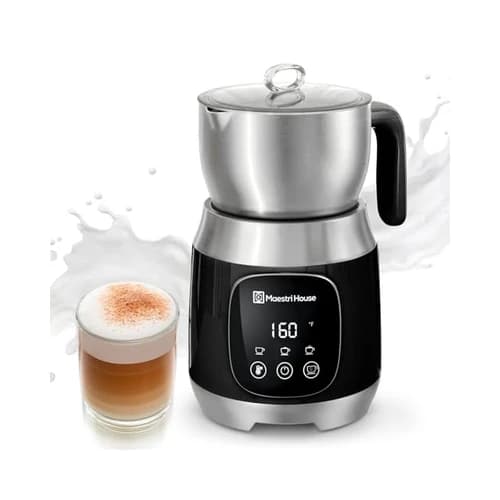
2. Maestri House DualFro 600
The Maestri House DualFro 600 is the control panel pick. It separates milk temperature from foam thickness, so an oat latte does not have to accept the same cycle as a dairy cappuccino.
Oat milk can taste cooked before a heat-loving drinker thinks the cup is hot enough. Model MMF9304 answers with four heat choices and a removable 3.5-to-10.5 oz frothing jug.
Maestri House DualFro 600 (MMF9304)
Rated 4.5 from 710 ratings
A large detachable-jug system with separate temperature and foam-thickness controls, six modes, and setting memory.
Key details
120°F, 140°F, 160°F, and cold settings
Low, medium, and high froth thickness
10.5 oz frothing and 21 oz heating limits
Six touch modes with setting memory
Dishwasher-safe 304 stainless steel jug
3.5 oz minimum fill and overheat protection
What we like
Heat and foam controls address different oat formulas
Useful range from one small cup to several drinks
Detachable jug and whisk are top-rack safe
Memory restores a proven daily combination
Watch out for
More controls to learn than a one-button cup
Large body claims meaningful counter space
Full cycles take longer to protect against sticking
Its 4.5-star average across 710 ratings is excellent at the time of writing. The review base is smaller than Capresso's, but it is dense enough to reveal daily-use patterns.
Middle-rated feedback tends to like the foam and removable jug while questioning cycle time, footprint, or final heat. A 160°F setting can still feel cooler after milk meets espresso and a cold mug.
The maker says its intermittent heating is intentional. Pauses reduce sticking and scorching, so a slower full jug is a design trade rather than proof that the heater is weak.
The fussy point is the magnetic whisk. Installing it upside down can stop rotation, and oat film under the hub can imitate a motor fault.
Buy this when two people want different textures, or one person changes between hot latte and iced cold foam. For a single fixed drink, Capresso is simpler and cheaper.
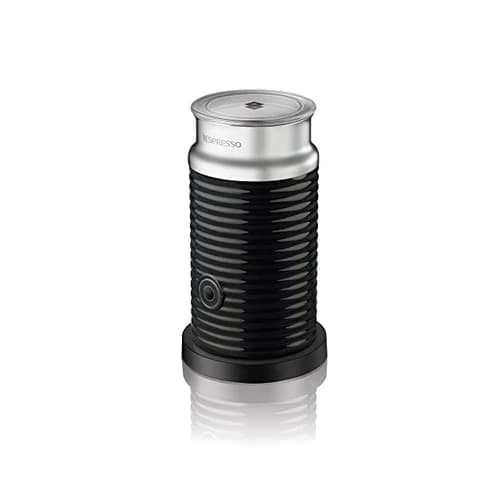
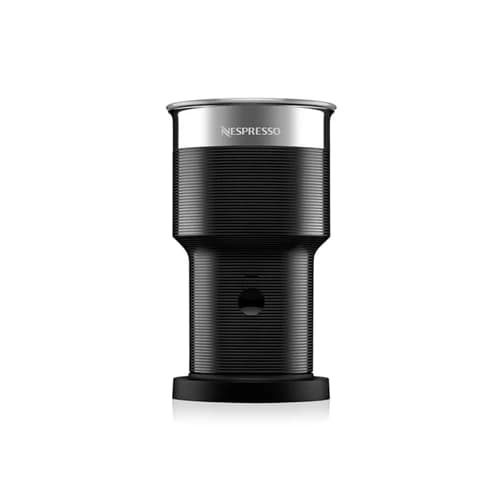
3. Nespresso Aeroccino 3
The Nespresso Aeroccino 3 is the compact answer for a person who values one repeatable button more than a menu. It is narrow, quiet, and sized around one drink.
Nespresso permits oat drinks and advises cold barista-style milk for better foam. Reference 3594 uses a magnetic whisk, with a 4.1 oz foam limit and an 8.1 oz hot-milk limit.
Nespresso Aeroccino 3 (3594)
Rated 4.4 from 9,641 ratings
A slim one-button magnetic-whisk frother for hot foam, cold foam, or heated milk in a single-cup batch.
At the time of writing, its 9,641 ratings average 4.4 stars. Few standalone frothers combine that owner depth with such a small number of controls.
Three-star and repair discussions often start with changing foam quality. The culprit may be a new oat carton, residue around the whisk, a loose whisk, or a heater that needs time to cool.
Cooked film on the bottom is the persistent complaint. Rinsing at once with a soft cloth protects the inner surface better than letting sweet oat residue dry and then scrubbing it.
The fixed jug is the weak point because the powered body cannot go in a dishwasher or sink. Consecutive drinks also risk an overheat blink until it cools.
Buy it for one hot cappuccino or one iced oat coffee at a time. Skip it for a couple making drinks together, or for a flat-white drinker who wants controlled microfoam.
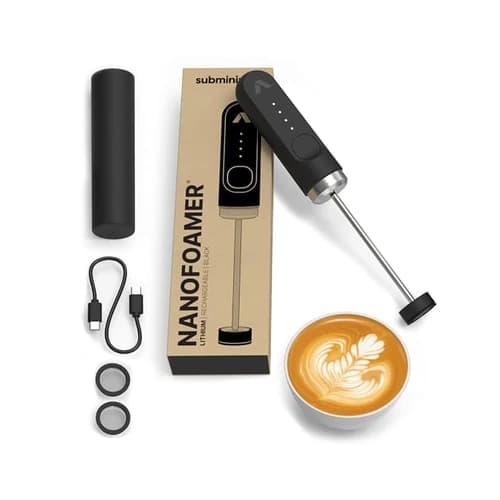
4. Subminimal NanoFoamer Lithium
The Subminimal NanoFoamer Lithium is not an automatic frother in wand clothing. Its tiny screened impeller is designed to break larger bubbles down and distribute them through the liquid.
Model NF-03-LI is the strongest texture specialist here, with USB-C power, two speeds, two NanoScreens, up to 3,500 RPM, and IPX4 splash resistance. Heating stays in your hands.
Subminimal NanoFoamer Lithium (NF-03-LI)
Rated 4.1 from 1,322 ratings
A rechargeable screened impeller that trades automatic heating for much finer control over bubble size and pourable texture.
The 4.1-star average across 1,322 ratings clears our bar, but it is the lowest score in the final list at the time of writing. That is the cost of selling a technique as a product.
An independent oat-milk test found a thin layer of larger surface bubbles over finer, creamy foam through the drink. The result was closer to cafe texture than a normal coil wand, not identical to steam.
Middle-rated owners often like the result after practice but dislike the learning curve. Other recurring concerns are a wobbly shaft, cracked screens or impellers, and a rechargeable unit that later stops holding power.
Its weak point is the complete workflow. Microwave or stovetop heat, a tall pitcher, active hand time, and an immediate rinse surround the 30-second texturing step.
Buy it with a manual espresso maker when latte art and integrated texture matter more than convenience. Do not buy it to replace one-button hot milk.
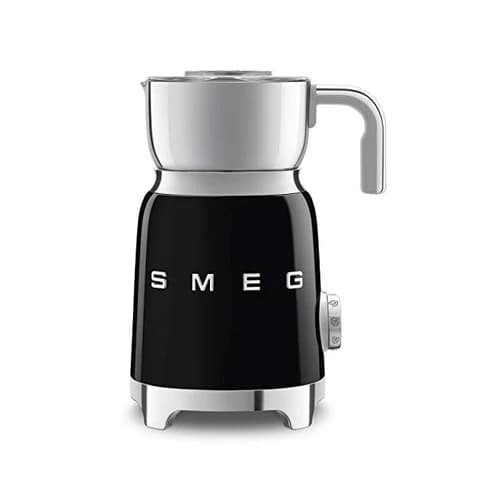
5. SMEG MFF11 Milk Frother
The SMEG MFF11 Milk Frother is the premium appliance, not the rational budget winner. Its case rests on a real induction system, a removable steel carafe, and a wider drink menu.
Model MFF11 makes light or dense hot and cold foam, milk, and cocoa. It starts at 125 ml, froths 250 ml, heats 600 ml, and uses separate heating and frothing discs.
SMEG MFF11 Milk Frother
Rated 4.5 from 349 ratings
A retro induction frother with a removable steel carafe, two discs, six automatic programs, and manual hot or cold control.
Its 349 ratings average 4.5 stars at the time of writing. The score is strong, though the review base is the thinnest among our eight and deserves less confidence than a similar score across thousands.
Expert reviews consistently praise the range, removable jug, and drink quality. The repeated objections are price, footprint, and a final temperature that some owners consider too cool.
Oat milk needs a cautious reading here. The controls make a light 125 ml batch plausible, but we did not find a strong independent full-size MFF11 oat test to justify a guaranteed texture claim.
The honest weak point is value. The $249.95 price is not buying five times the foam quality of our winner, and no owner rating can make that arithmetic disappear.
Buy it for a design-led kitchen that also makes hot chocolate and several milk styles. If oat lattes are its only job, spend the difference on better coffee and barista cartons.
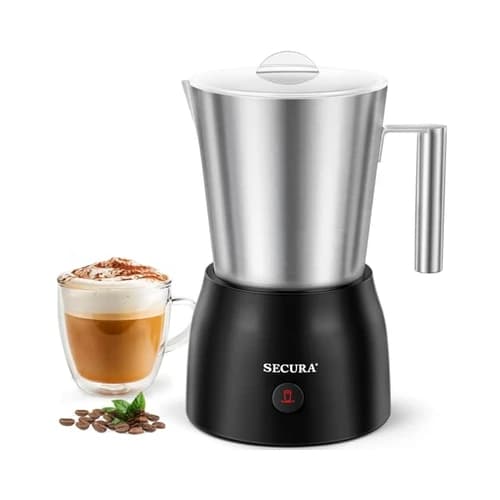
6. Secura 17 oz Milk Frother
The Secura 17 oz Milk Frother serves a very specific buyer: someone who wants a removable stainless interior without a nonstick or Teflon coating.
Model F280R has a dishwasher-safe coating-free jug, but its 5.1 oz minimum is high for a short drink. It froths to 8.5 oz, heats to 17 oz, and includes two whisks.
Secura 17 oz Milk Frother (F280R)
Rated 4.2 from 9,206 ratings
A coating-free detachable steel jug with separate frothing and heating whisks for hot foam, cold foam, milk, and cocoa.
At the time of writing, the 9,206-rating record sits at 4.2 stars. The distribution is less spotless than the best compact models, but it offers far more evidence than a new listing.
Middle-rated owners describe a frothing whisk that can be too eager, leaving dry foam over thinner milk. The heating whisk is a useful workaround when a wetter oat latte is the goal.
The more serious long-term pattern is a whisk that turns slowly or stops. Residue under the hub can cause it, but repair threads also describe replacement magnets or whisk assemblies restoring operation.
Its weak point for oat milk is that 150 ml minimum. A short cortado-style drink either gets extra milk, shares a batch, or sends the unused portion back to the refrigerator before heating.
Buy it for two cups, hot cocoa, coating concerns, and low-effort cleanup. For one small latte, the lower-fill Maestri or compact Nespresso is a better physical fit.
7. Nespresso Aeroccino XL
The Nespresso Aeroccino XL takes the familiar one-button idea and makes enough foam for two drinks. It is the choice for capacity without a settings panel.
Model 4392 froths 7.6 oz or heats 13.5 oz in a 4.66-inch-wide jug. That simplicity helps at breakfast, but Maestri costs less and exposes more controls.
Nespresso Aeroccino XL (4392)
Rated 4.2 from 558 ratings
A large automatic Nespresso jug with three preparations, enough foam for two drinks, and dishwasher-resistant construction.
Its 558 owner ratings average 4.2 stars at the time of writing. That is adequate evidence, but not the decades-deep confidence attached to the smaller Aeroccino 3.
The recurring middle ground is inconsistency with hot foam. Owners describe a good cold cycle, then thinner hot results or a red blink that asks for cooling, cleaning, more milk, or a correctly seated whisk.
Thicker oat formulas can make diagnosis harder. Nespresso itself tells users to start with cold, freshly opened milk and to keep the jug and whisk clean.
The weak point is the pour. Independent testing found thick foam separating from the liquid, so the cup received hot milk first and a final dollop rather than one integrated stream.
Buy it when two people want quick cappuccinos and no one wants to program a temperature. A solo drinker should take the smaller model and keep $45.
8. Zulay Kitchen Milk Boss Z1
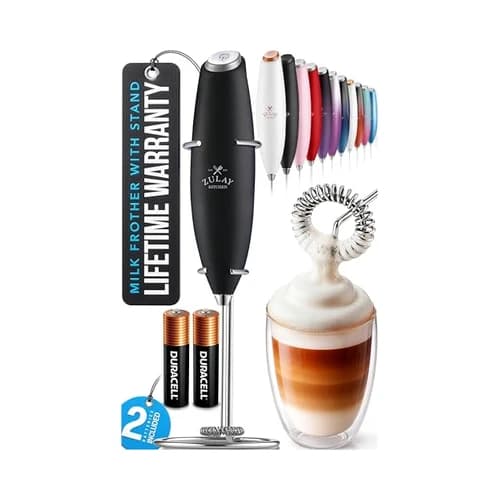
The Zulay Kitchen Milk Boss Z1 is here because $14.99 can still buy a useful tool. It makes an airy topping, mixes matcha, and disappears into a drawer.
The Classic Milk Boss Z1 uses an open steel coil and two AA batteries; this bundle included Duracells and a stand. It neither heats milk nor matches a screened impeller's texture.
Zulay Kitchen Milk Boss Z1
Rated 4.4 from 237,604 ratings
A simple battery wand for adding a fast oat-foam cap or mixing matcha, cocoa, protein powder, and creamer.
The 4.4-star average across 237,604 ratings is extraordinary at the time of writing. It strongly supports this as a useful mixer, not as a way around the limits of an open coil.
Middle-rated reports tend to begin after the first batteries weaken. Foam thins gradually, the button feels less certain, or the whisk head develops play on the shaft.
Moisture is the avoidable risk. The whisk can rinse under running water while spinning, but the plastic handle and battery compartment must stay out of the stream.
The honest weak point is texture separation. The coil creates visible air quickly, yet it does less to break and integrate bubbles, so oat foam can sit over watery milk and collapse in coffee.
Buy it for a fast topping, occasional iced coffee, matcha, or a first experiment. If the goal is a silky latte, treat it as a mixer and save for a different mechanism.
The carton can beat the machine
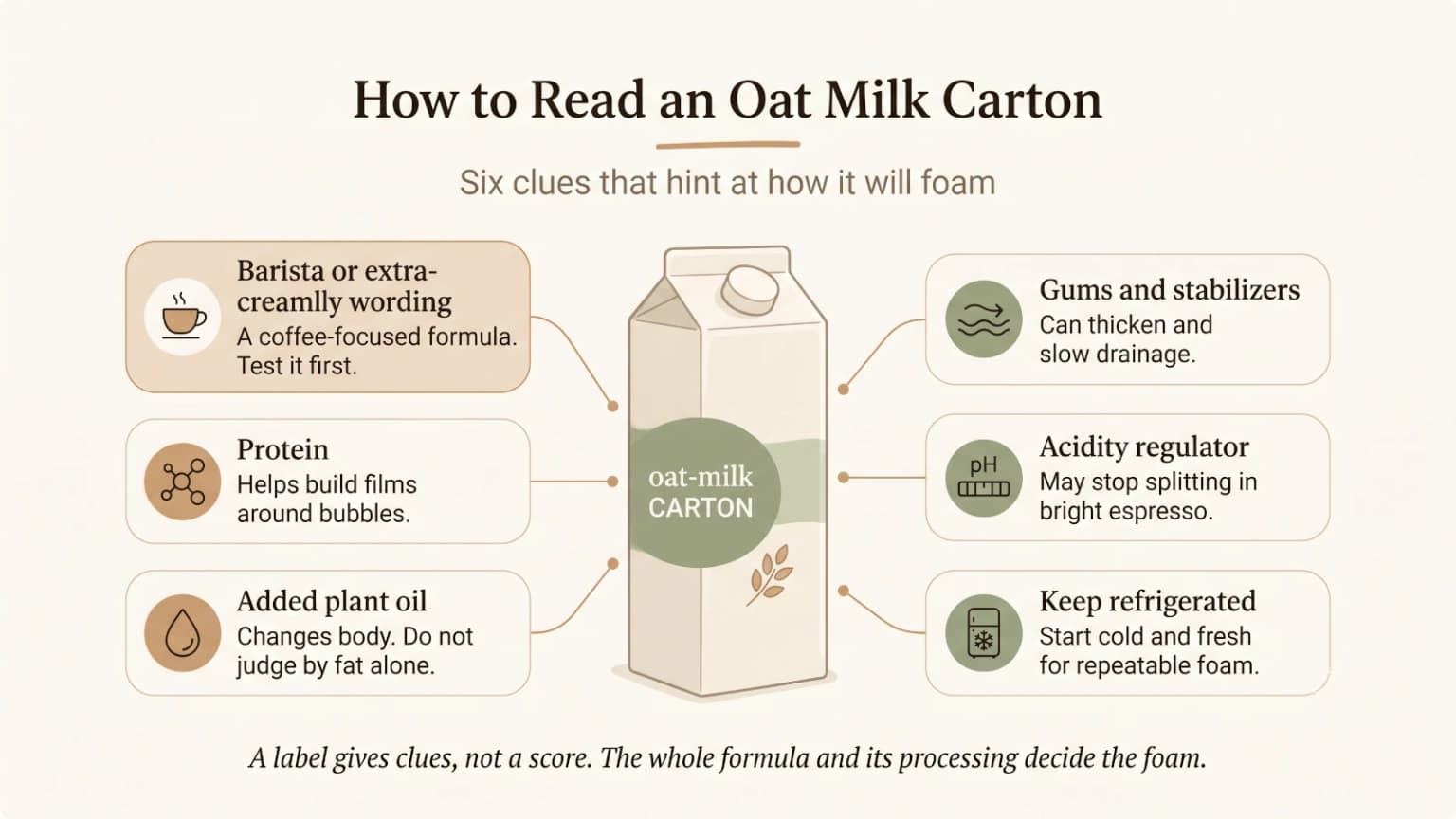
Oat milk is not dairy milk with one ingredient swapped. It is a processed suspension whose protein, oil, starch, minerals, stabilizers, and acidity controls vary by brand and recipe.
That is why a more powerful motor does not guarantee better foam. Recent food-science work found that oil can either harm or support stability depending on its interaction with protein and the surrounding structure.
Protein matters because it helps form films around air bubbles. The amount on a nutrition panel is only part of the story, since processing also changes how available that protein is at the liquid-air boundary.
Oil adds body but is not a simple foam booster. Too much free fat can disrupt bubbles, while a well-emulsified formula can support the creamy mouthfeel people expect from oat milk.
A carton label supplies clues, not a score. Foam depends on how the complete formula behaves under heat and shear.
The barista label is still the best starting filter. It usually signals that the maker designed the drink to texture and remain mixed when it meets hot, acidic coffee.
It is not a regulated promise of bubble size. Keep the brand, product line, and flavor constant once you find a carton that works.
What an oat milk label can tell you
What an oat milk label can tell you
Carton clue
What it may change
Best response
Barista or extra-creamy wording
Signals a coffee-focused formula
Use as the first test carton
Added plant oil
Changes body and bubble behavior
Do not judge by fat grams alone
Gums or stabilizers
Can slow drainage and thicken liquid
Use a strong circulating vortex
Higher protein than the basic line
May support stronger bubble films
Compare within the same brand
Acidity regulator
May reduce splitting in coffee
Useful for bright espresso
Fresh and refrigerated
Improves repeatability at the start
Chill, shake, then measure
No ingredient works alone. The exact product and its processing history matter more than one impressive number.
Temperature adds another variable. Heat lowers viscosity and changes proteins, while too much time can create cooked flavor, film, or a foam that drains before the cup is ready.
This is where the Maestri House DualFro 600 earns its control panel. A repeatable 140°F setting is a better experiment than switching cartons and heat levels together.
If a carton foams well but splits when poured into coffee, test the coffee too. A very hot, bright espresso shot creates a different chemical environment from a concentrated stovetop brew.
Four ways to move air through oat milk
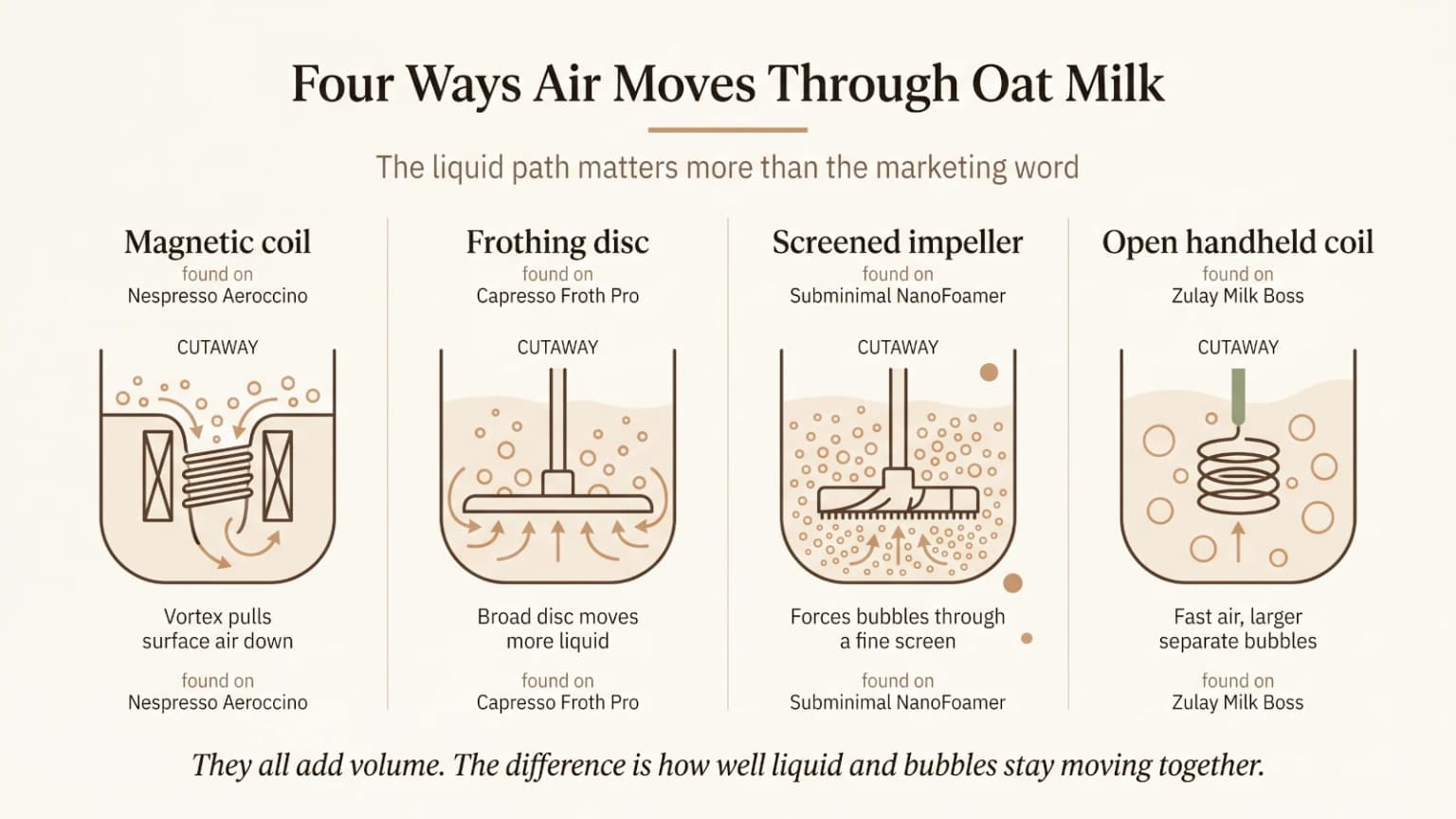
The frother mechanism determines where air enters, how bubbles are broken down, and whether heat arrives at the same time. Marketing terms hide those differences, so the liquid path is more useful.
Four mechanisms can all increase volume. Their real difference is how well they keep liquid and bubbles moving together.
A magnetic coil spins near the jug floor. The vortex pulls surface air down, while the heater changes viscosity and the oat formula decides how long the new bubbles survive.
That is the basic path inside the Nespresso Aeroccino 3 and many similar cups. It is quick and repeatable, but its fixed speed favors a programmed foam style.
A broader frothing disc moves more liquid across the base. In the Capresso Froth Pro, independent tests found this path produced fine alternative-milk texture without hand technique.
A screened impeller works closer to a bubble refinery. The Subminimal NanoFoamer Lithium draws air, then forces circulation around a fine screen to reduce visible bubbles.
An open handheld coil prioritizes speed and expansion. It is effective for a foam cap, yet large bubbles can remain separate because nothing forces them through a fine screen.
Smooth heating discs belong in the discussion too. They stir without chasing maximum air, which is exactly what a latte needs when an aggressive coil makes the oat milk too dry.
Induction describes the heating method, not the foam texture. The SMEG system still depends on the chosen disc and program, while its induction base helps a removable jug heat without an exposed hot plate.
None of these mechanisms adds the water and pressure of steam. That is why even excellent standalone foam can feel different from milk stretched by a skilled espresso-machine wand.
Capacity decides daily convenience
Maximum capacity sells the appliance, but minimum capacity shapes breakfast. A large jug can be a poor solo tool if its whisk needs more milk than the drink can use.
Match the minimum line to the milk your normal cup can actually use.
The Secura 17 oz Milk Frother requires at least 5.1 oz for every mode. That is sensible for two cappuccinos and awkward for one small coffee.
Maestri starts at 3.5 oz, Capresso at 4 oz, and SMEG at about 4.2 oz. Those lines are not suggestions, because the whisk and temperature sensor need enough liquid around them.
Maximum foam lines sit lower than heating lines for a reason. Oat milk needs expansion space, and exceeding the frothing mark can push hot liquid into the lid or onto the base.
Jug shape matters after the cycle. A handle and defined spout help swirl foam back into liquid; a round lip encourages milk to leave first and a thick cap to follow.
Counter height is only part of fit. Leave room to lift a lid, remove the jug, reach the wall outlet, and place wet parts without dripping onto a powered base.
Automatic jugs are usually low, soft whirring appliances. Handheld tools sound sharper because their small motors spin faster and operate in an open vessel.
For consecutive drinks, heat protection matters more than raw speed. A second cycle may refuse to start until the base cools, so one larger batch can beat two rushed small batches.
The case against countertop frothers
The enthusiast objection is fair: most countertop frothers make aerated hot milk, not the glossy microfoam produced by a capable steam wand and practiced hands.
Automatic jugs tend to optimize reliability and visible volume. That is ideal for a cappuccino cap and less ideal for a flat white whose foam must stay integrated through the pour.
If your espresso machine already has a strong wand, use it before buying another appliance. The wand can heat, stretch, and roll oat milk in one pitcher, with more control over when air stops entering.
A French press is another credible tool. Warm the oat milk separately, pump gently to add air, then swirl and pour; the mesh can make fine foam, though the glass and plunger add cleanup.
A basic wand already in the drawer may be enough for iced coffee. The Zulay Kitchen Milk Boss Z1 costs little because it solves topping and mixing, not temperature control.
The case for a countertop machine is routine. It heats while coffee brews, stops automatically, and produces the same programmed result without asking anyone to learn a steam roll, the same logic behind the frother built into some dual coffee makers.
It also keeps a dairy-free household away from a shared wand. That separation can be useful for preference or allergy management, though the whole prep area still needs appropriate controls for a medical allergy.
Skip a countertop frother when the existing wand works, storage is scarce, or milk drinks happen twice a month. Convenience cannot repay counter space that the household does not use.
Oat milk waste is the hidden cost
The frother is a one-time purchase. The oat milk passing through its minimum line is the recurring bill, and a poor capacity match can cost more than the difference between two machines.
Consider a simple illustration using a $4, 64 oz carton. The price is an example, not a claim about every brand or store.
What a daily oat-milk habit costs
What a daily oat-milk habit costs
Milk used each day
64 oz cartons per year
Annual cost at $4 each
Typical fit
4 oz
22.8
$91.25
Small latte or one foam layer
5.1 oz
29.1
$116.34
Secura minimum fill
6 oz
34.2
$136.88
Ordinary single latte
8 oz
45.6
$182.50
Large milk-forward drink
12 oz
68.4
$273.75
Two 6 oz drinks
Illustration assumes 365 uses, no spoilage, and a constant $4 per 64 oz carton. Your formula and local price will differ.
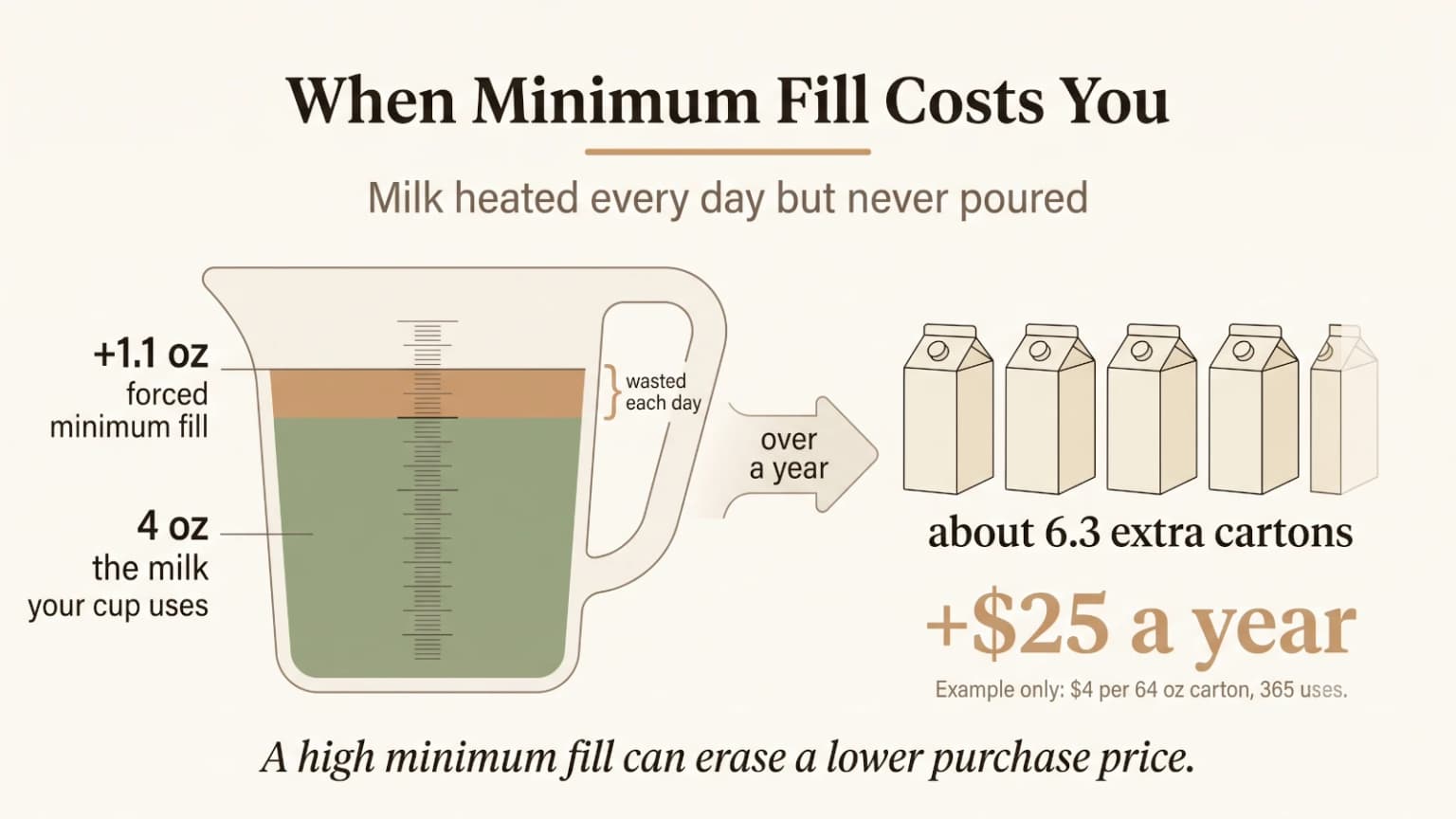
Moving from a 4 oz drink to a forced 5.1 oz fill adds about 6.3 cartons and $25 a year under those assumptions. That can erase a small purchase-price saving.
Minimum fill becomes a real ownership cost when the extra milk is heated but never reaches the cup.
Avoid waste by matching the batch to the household. Make two drinks together, choose a lower-minimum jug, or use a handheld tool in the exact quantity the cup needs.
Consumable parts are the smaller cost. AA batteries, replacement discs, and magnetic whisks are inexpensive when available, but a proprietary part can sideline an otherwise working base.
Electricity is minor beside a daily carton. Reliability matters more: a rinsed hub and intact whisk preserve the appliance and the oat milk spent while diagnosing weak foam.
When to buy
Buy when the chosen model fits your normal batch and the verified price already meets your budget. At publication, the field ran from $14.99 to $249.95 and every listing was in stock.
Prime Day and Black Friday often create the best reason to wait on Nespresso or SMEG. A lost or failed daily-use frother is different; several months of cafe drinks can exceed a modest sale saving.
Do not buy extra capacity for hypothetical guests. Buy the line that fits most mornings, then run a second batch on the rare crowded one.
How to make silky oat milk foam
Good technique is mostly controlled comparison. Keep the carton, volume, and cup fixed, then change one setting until the texture moves in the right direction.
Automatic-machine owners still have choices. Milk temperature, fill amount, whisk selection, light or dense mode, and pour timing all affect the final cup.
Change one variable per batch, or the result cannot tell you what worked.
A repeatable oat-milk frothing method
1
Choose one coffee-ready carton
Start with a barista or extra-creamy oat milk. Record the exact product, because another line from the same brand may use a different formula.
Tip Test a new carton before changing the frother setting.
2
Chill, shake, and measure
Use freshly refrigerated milk and shake the closed carton as directed. Measure only the amount that sits safely between the appliance lines.
3
Clean and seat the whisk
Remove any slick oat film from the hub, disc, or screen. Refit the part in the orientation shown by the manual before adding milk.
Watch out A reversed or half-seated magnetic whisk can turn weakly or not at all.
4
Begin with moderate heat
Choose about 140°F when temperature control is available. A lower start protects sweetness and gives you room to correct a cool cup later.
5
Add only the air the drink needs
Use light foam for a latte and dense foam for a cap. With a NanoFoamer, work near the surface briefly, then lower the impeller to stop adding air.
6
Integrate before pouring
Swirl the finished milk until the surface looks glossy and the liquid moves together. Tap out a few large bubbles rather than letting the batch stand.
7
Pour now, then change one variable
Pour into fresh coffee immediately. If the result misses, change only heat, air time, volume, or carton on the next attempt so the lesson is clear.
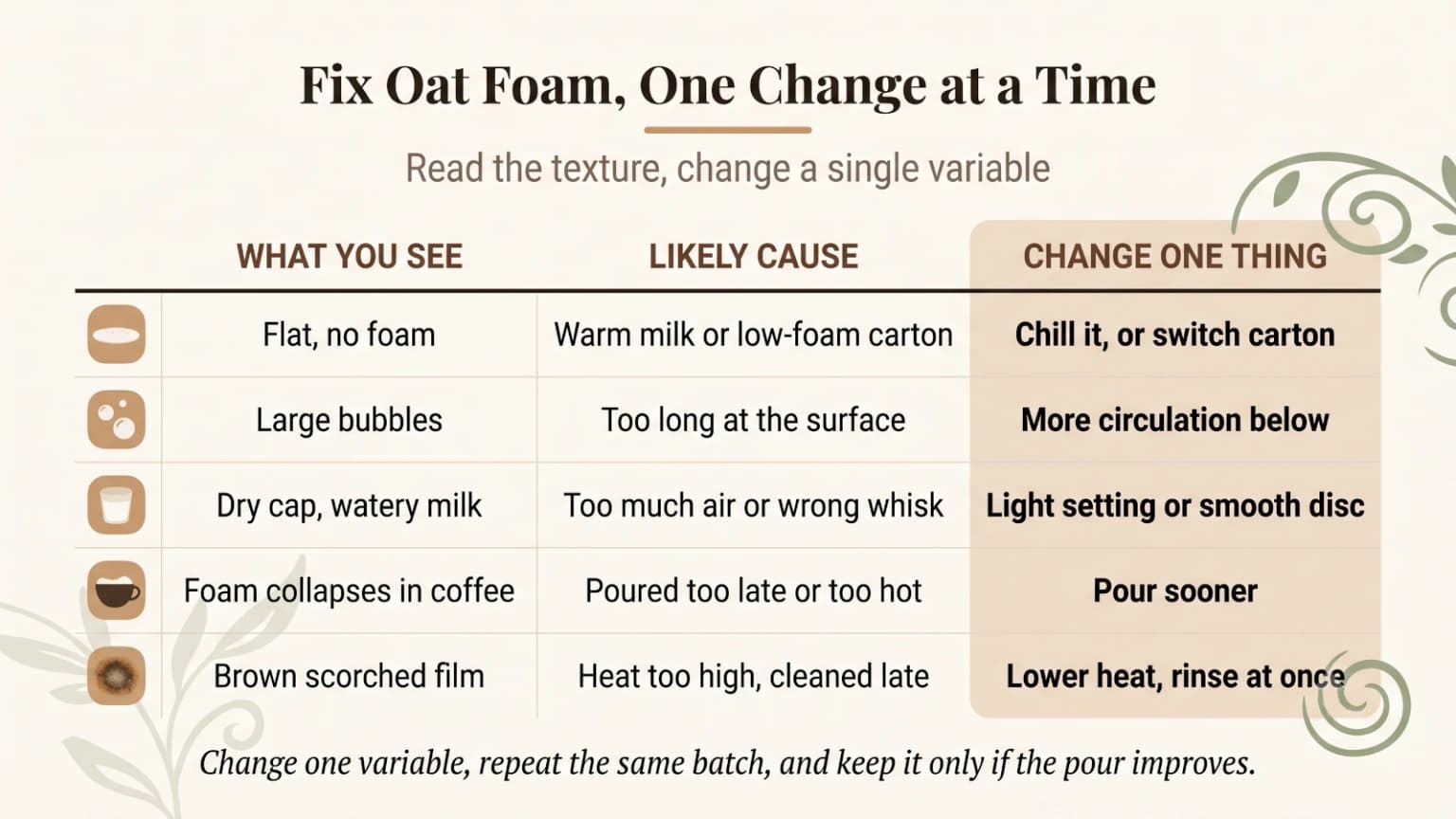
Treat texture as a symptom. Correct one likely cause, repeat the same batch, and keep the change only if the pour improves.
Flat milk calls for a colder or more foam-capable carton before more heat. Large bubbles call for less surface time and more circulation below the surface.
A dry cap over watery milk means too much air or the wrong whisk. Switch to a light setting, smooth disc, or shorter aeration phase.
Foam that looks good and collapses in coffee may be waiting too long, meeting a very hot drink, or lacking enough structure. Pour sooner before buying anything else.
Brown film is a cleaning and heat warning, not a flavor feature. Lower the setting, rinse sooner, and never scrape a coated jug with metal.
Clean before the oat film dries
Oat milk leaves a sweet, slippery film that can dry around a spindle before the jug looks dirty. That hidden ring adds drag, changes whisk speed, and eventually smells stale.
The best maintenance routine starts before drinking the coffee. A fast rinse now prevents the longer soak that everyone postpones later.
The after-every-cup cleaning routine
1
Unplug and separate powered parts
Lift off a detachable jug and let a very hot surface settle. Keep the base, plug, and battery handle away from the sink.
2
Rinse while residue is soft
Use warm water as soon as the milk is poured. Wipe with a soft cloth or nonabrasive sponge instead of waiting for a cooked ring.
3
Remove the whisk or disc
Clean both faces and the spindle recess. A clear-looking jug can still hold enough oat film under the hub to slow magnetic drive.
4
Follow the jug-specific rule
Dishwash only parts the current manual approves. Hand-wash a powered or coated jug without immersing its connector.
Watch out Dishwasher safe is model-specific, even inside one brand family.
5
Dry every contact point
Dry the underside of a removable jug before it returns to the base. Water on an electrical contact can trigger errors and invites corrosion.
6
Inspect the small wear parts
Check screens, coils, discs, and shafts for cracks, wobble, or weak fit. Replace a worn part before it wastes several batches during diagnosis.
For a handheld wand, rinse only the metal shaft while the motor runs briefly. Wipe the handle and stand separately, then let the whisk dry before storage.
For a fixed powered jug, use a soft tool around the bottom sensor area. Abrasive pads can turn one stubborn mark into permanent coating damage.
Weekly, lift every removable part and check for pale dried residue. Monthly, inspect the cable, base contact, whisk fit, and any replacement-part stock the manufacturer offers.
Never add syrup, sugar, or cocoa unless the manual permits mix-ins in that mode. Sugar changes both cleaning difficulty and the chance of material sticking near the heater.
Which milk frother should you buy in 2026?
The first decision is texture. The second is how much control and cleanup you will accept on an ordinary morning.
For most people, automatic heat plus a removable jug wins. For an espresso hobbyist, finer manual control can be worth a separate heating step.
The right pick should match the exact carton, cup size, and cleanup habit already in your kitchen. That fit creates more value than the thickest showroom foam.
Frequently asked questions
Can you froth oat milk in a milk frother?
Yes. Oat milk can make anything from a loose creamy layer to a tall cap of foam, but the carton formula matters as much as the frother.
Start with cold barista-style oat milk. Its protein, oil, and stabilizer balance is usually designed to hold air better than a basic oat beverage.
A standard coil frother favors airy foam. A screen impeller or a machine with texture control is better for fine, pourable foam.
Why does oat milk not froth well?
The usual causes are a low-foam oat formula, warm milk at the start, residue on the whisk, too much liquid, or a weak battery.
Try a freshly opened barista carton from the refrigerator. Clean and fully seat the whisk, stay inside the marked fill range, and pour as soon as the cycle ends.
If another carton works in the same device, the first milk was the limiting variable.
Does barista oat milk froth better?
It usually does. Barista formulas are built for coffee, with a different balance of protein, oil, acidity control, and stabilizers than many regular oat drinks.
The word barista is not a performance guarantee. Two cartons with that label can still foam differently, so keep the exact formula that works for your frother.
What temperature should oat milk be frothed to?
A useful home target is roughly 140°F to 150°F for a hot latte. Oat milk can lose sweetness or form a cooked film when pushed too hot.
Follow the carton guidance when it gives a limit. On an automatic frother, start with the lower heat option and move higher only if the drink reaches the cup too cool.
Can you make cold foam with oat milk?
Yes, especially with a cold-foam program and a barista or extra-creamy oat milk. The result is normally lighter and less persistent than dairy cold foam.
Keep the carton refrigerated, use a small enough batch for the whisk to circulate, and add syrup after foaming unless the appliance manual permits mix-ins.
Is a milk frother worth it for oat milk?
It is worth it when milk drinks are part of your weekly routine and a steam wand is too much work. A good automatic jug heats and aerates while coffee brews.
Skip a countertop model if you only want a bubbly topping. A $14.99 handheld wand can do that, though it cannot heat milk or reliably make latte-art microfoam.