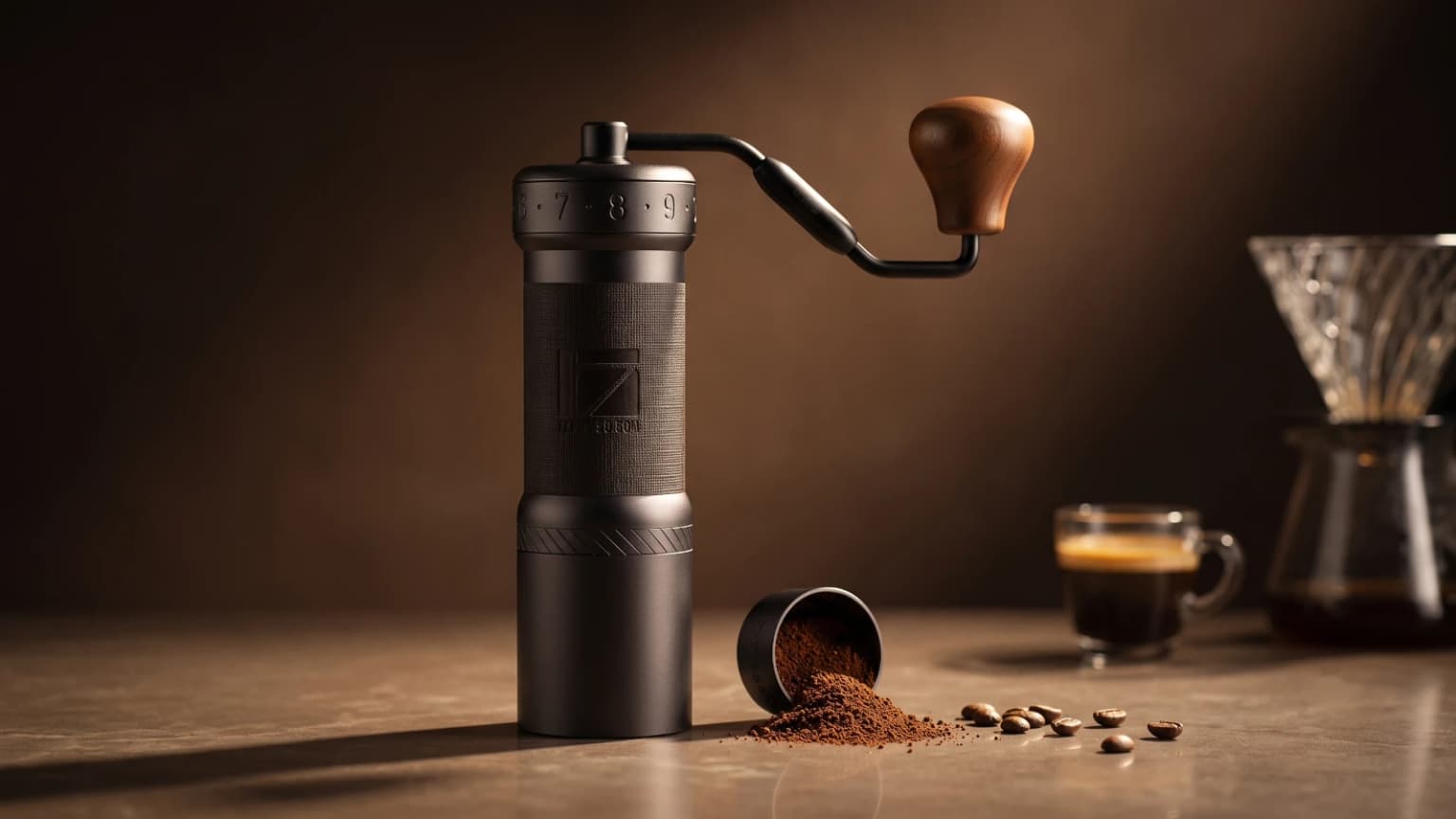
The 1Zpresso K-Ultra is the grinder people reach for when they are tired of owning two. It aims to pull a real espresso shot and lay down a clean pour over bed from the same body.
That is a hard promise for a hand grinder, and it is the reason this 1Zpresso K-Ultra review exists. Doing two jobs well usually means compromising on one.
We are a research-driven publication, so this 2026 verdict leans on owner reviews, expert testing, and 1Zpresso's own specifications rather than a few brews of our own. We read the three-star reports as closely as the praise.
Who the K-Ultra is really for
The K-Ultra is built for the brewer who owns more than one brewer. It suits a shelf that holds an espresso setup on one side and a V60 or press on the other.
If that is your kitchen, a single grinder that jumps cleanly between both is worth real money. You stop paying for two machines and two counters of space.
It is the wrong tool for two other people. A pure espresso obsessive wants finer steps, and a set-and-forget drip drinker does not need this range or this price.
The math also favors switchers. Two dedicated grinders cost more, take more counter space, and double the cleaning, so one capable all-rounder is often the smarter buy.
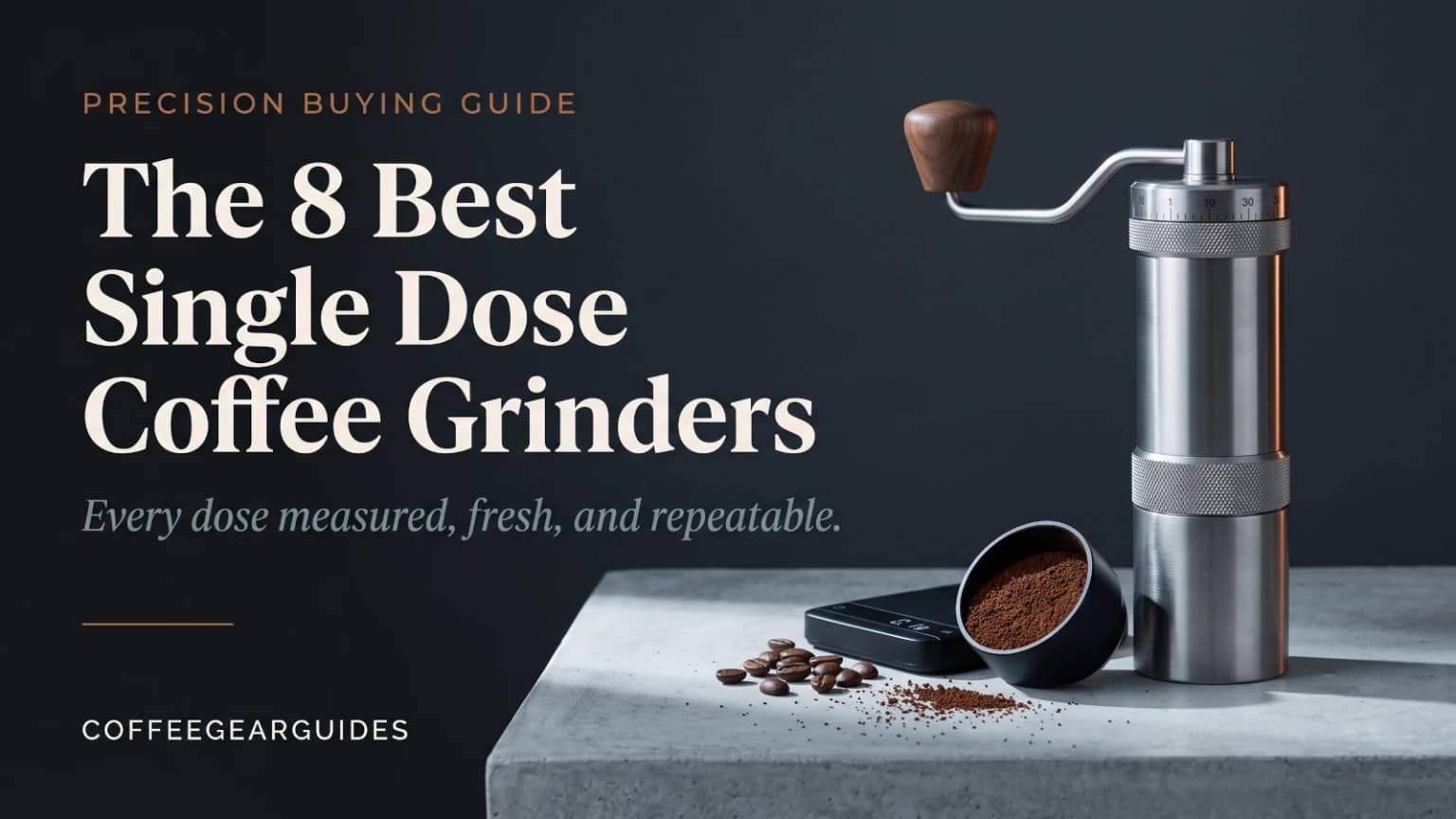
We named it our best overall pick in the single dose coffee grinder guide. This review is the long version of why, with the caveats spelled out.
What you get for $259
At around $259, the K-Ultra sits in premium hand-grinder territory. The box is more complete than the price alone suggests, which softens the sticker.
1Zpresso packs the grinder with a magnetic catch cup, a cleaning brush, an air blower, and a fitted travel case. There is no motor, no firmware, and nothing to plug in.
The body pairs stainless steel and aluminum alloy with a wooden crank ball. Owners describe it as dense and solid, the kind of tool that survives a knock in a bag.
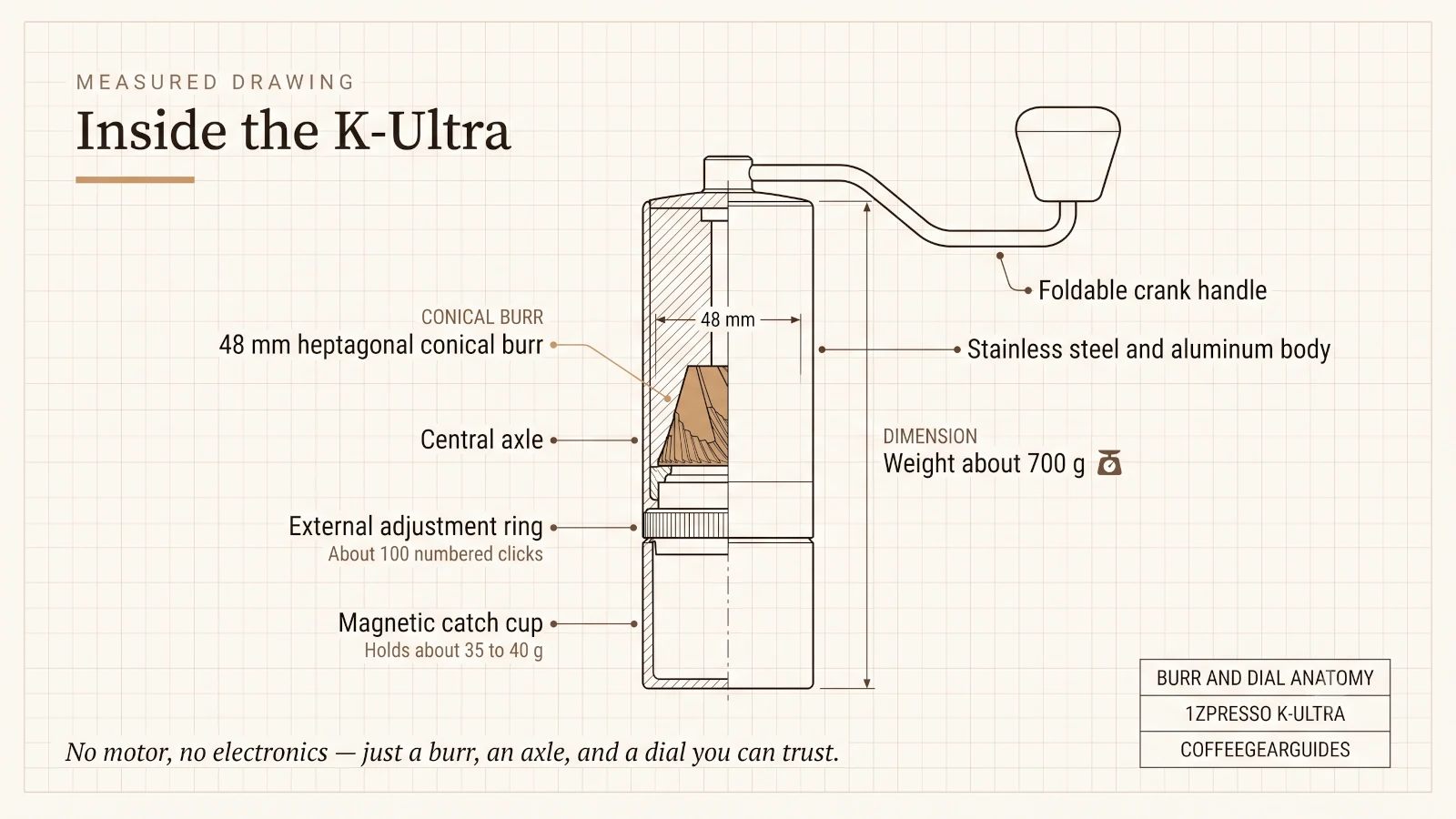
The K-Ultra's core: a 48mm heptagonal burr, a base adjustment ring, and a magnetic cup that pulls off for single dosing.
1Zpresso K-Ultra specifications
1Zpresso K-Ultra specifications
Specification
What 1Zpresso lists
Burr
48mm heptagonal conical, hardened steel
Adjustment
External ring, about 20 microns per click
Clicks per rotation
Around 100 numbered clicks
Grind range
Roughly 0 to 760 microns
Grounds capacity
About 35 to 40 grams
Weight
Around 700 grams
In the box
Grinder, brush, blower, travel case
Warranty
One-year limited
Figures are 1Zpresso's published specifications for the K-Ultra at the time of writing.
Nothing here is filler. Every part of that list earns its place in the sections below, starting with the burr that does the cutting.
The 48mm conical burrs
The heart of any grinder is the burr set, and the K-Ultra uses a 48mm heptagonal conical steel burr. The seven-sided cutting geometry is 1Zpresso's design for feeding beans smoothly.
Larger burrs generally cut faster and stay cooler over a dose. That helps the K-Ultra grind a filter dose in well under a minute without laboring.
What matters in the cup is particle distribution. Owners and testers describe a clean, uniform grind with few fines, the dust that muddies filter coffee and clogs espresso flow.
The result is a cup reviewers call sweet and articulate. For pour over especially, the K-Ultra separates flavors with a clarity that many electric grinders near this price cannot match.
What the cup actually tastes like
Specifications only matter if the coffee is better, so it is worth describing what owners consistently taste. The through-line is clarity.
Because the K-Ultra produces few fines, filter coffee comes through clean and layered. Reviewers describe brighter acidity and defined fruit notes that a bimodal, dustier grinder tends to blur.
Sweetness is the other repeated word. A tight particle distribution extracts more evenly, so you get less of the harsh, hollow edge that uneven grinding leaves behind.
For espresso, the character shifts toward body. The conical burr gives a syrupy, forgiving shot that flatters medium and darker roasts, even if it lacks a specialist grinder's last degree of separation.
Roast pairing is simple in practice. Lighter roasts reward the K-Ultra's clarity on pour over, while medium and darker beans make the smoothest espresso and the most effortless crank.
None of this makes it a magic wand. Water, dose, and technique still decide the cup, but the grinder gives you a clean starting point that good beans can build on.
The external dial and grind range
The K-Ultra's signature is its external adjustment ring. Instead of unscrewing the burr like older hand grinders, you turn a numbered dial at the base and hear a click at each step.
Each click moves the burrs about 20 microns, and a full rotation is roughly 100 clicks. The published range runs from near zero to about 760 microns, which spans espresso to cold brew.
That external design matters for a single-dose workflow. You can note a setting, change it, and return to it exactly, without counting turns or losing your espresso number.
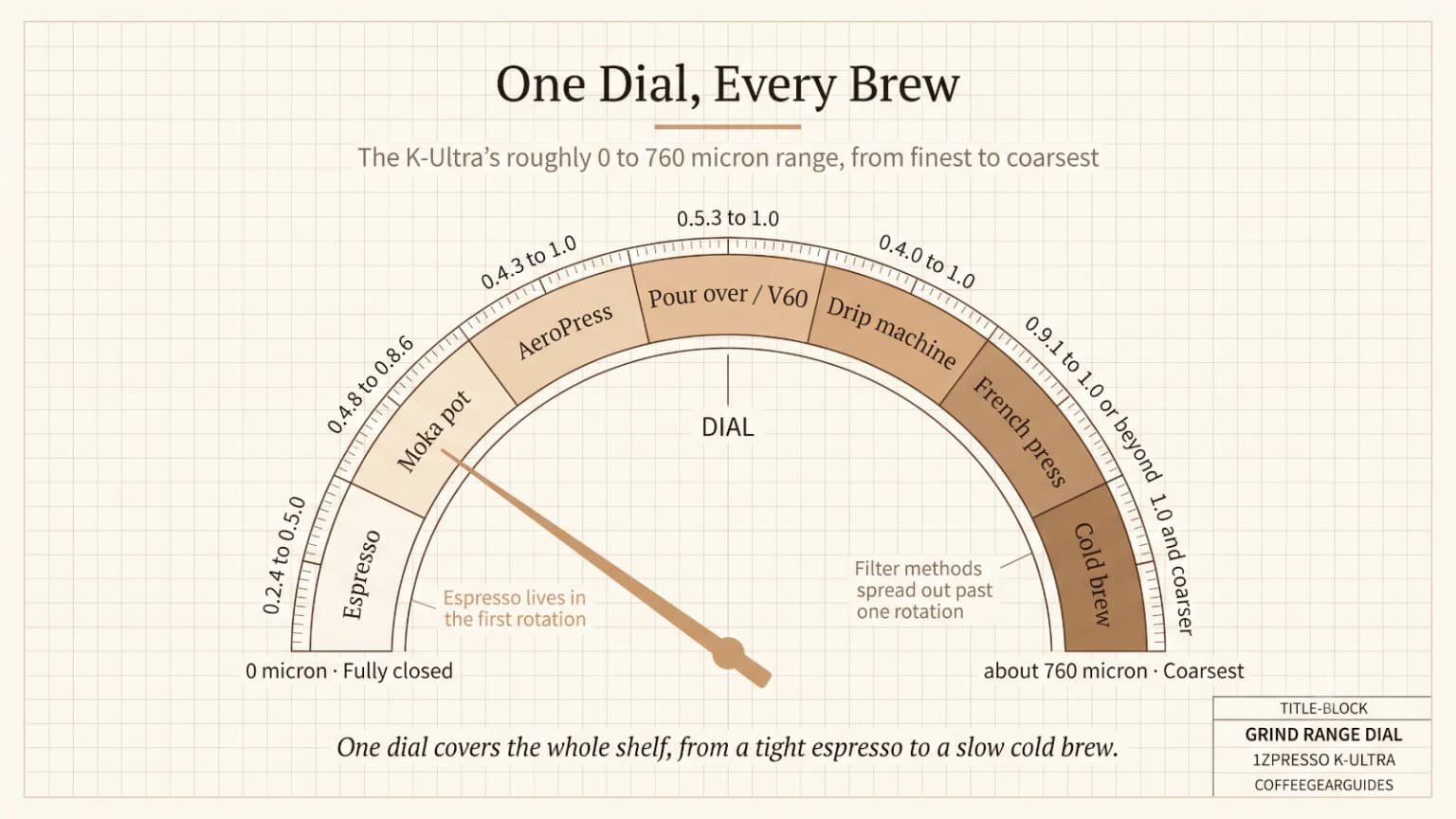
One dial covers the whole shelf. The K-Ultra's roughly 0 to 760 micron range places every common brew method on a single scale.
The trade sits inside that 20-micron step. For filter coffee, 20 microns is a sensible, usable increment that gets you on target quickly.
For espresso, 20 microns is a larger jump than enthusiasts want. A single click can move a shot from slightly fast to slightly slow, so you fine-tune with dose and tamp instead.
This is the core tension of an all-rounder. The K-Ultra chooses broad, fast, repeatable range over the microscopic espresso steps of a specialist grinder.
Grind settings for every brew
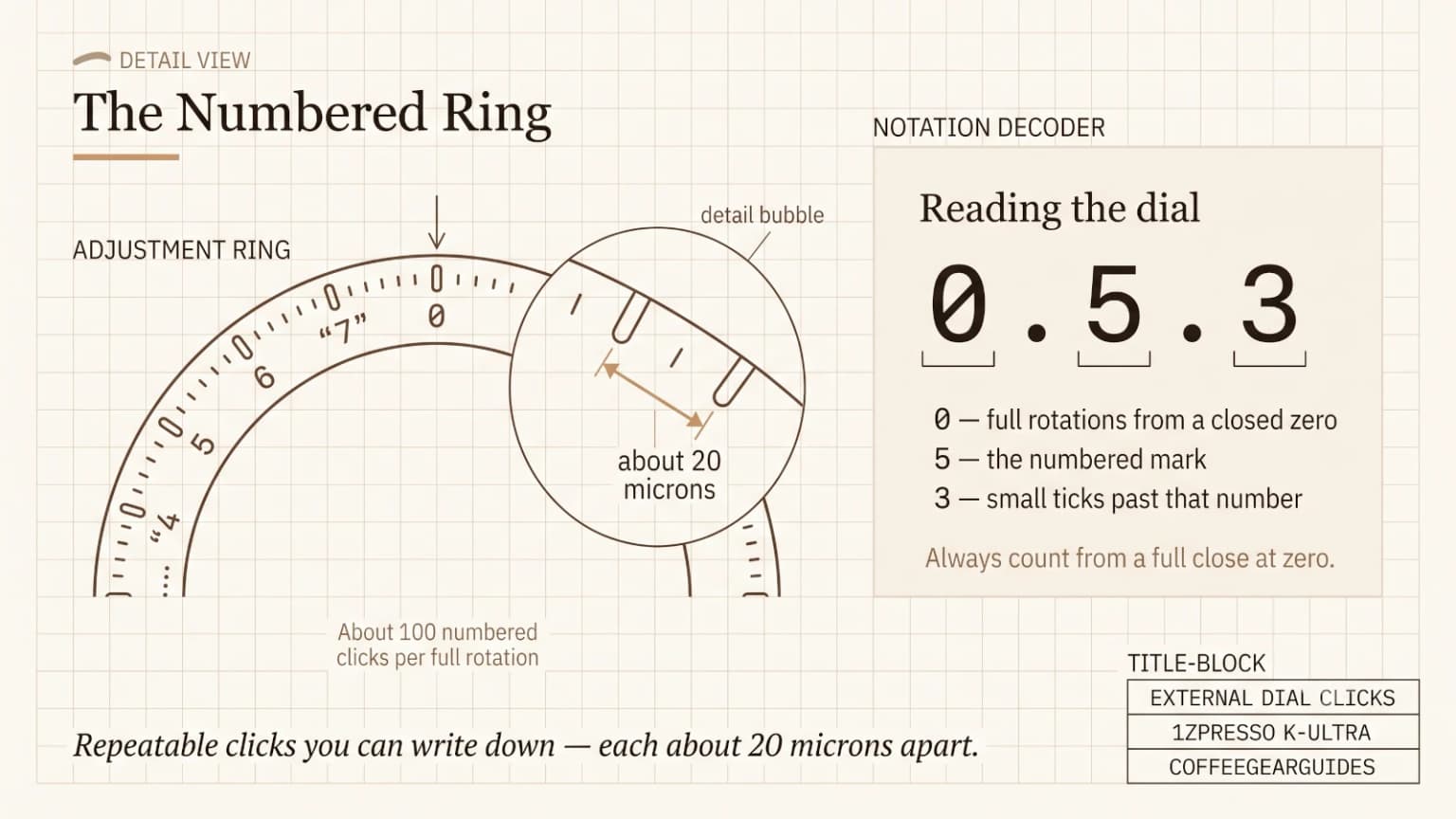
Because the dial is numbered, 1Zpresso settings travel between users as simple notation. The format reads as rotations, then the number, then the tick, for example 0.5.3.
The ranges below are common owner starting points, not fixed rules. Beans, roast, and taste move them, so treat each as a place to begin and adjust.
K-Ultra starting grind settings by brew
K-Ultra starting grind settings by brew
Brew method
Typical starting range (from zero)
Espresso
About 0.2.4 to 0.5.0
Moka pot
About 0.4.8 to 0.8.6
AeroPress
About 0.4.3 to 1.0
Pour over / V60
About 0.5.3 to 1.0
Drip machine
About 0.4.0 to 1.0
French press
About 0.9.1 to 1.0 or beyond
Cold brew
About 1.0 and coarser
Community starting points at the time of writing. Dial finer for faster flow and coarser for slower, then taste.
Notice how tightly espresso lives in that first rotation. Most of the espresso window sits under a single turn, which is why small dial moves feel large in the cup.
Filter methods spread out generously past one rotation. That space is where the K-Ultra feels effortless, letting you nudge a pour over or press without second-guessing the number.
Dialing in espresso and filter
Switching drinks is where this grinder justifies itself. A short twist of the ring takes you from a press setting down to espresso, and the number tells you exactly where you landed.
For filter, work in whole clicks. If a pour over runs too fast and tastes sharp, go two clicks finer; if it drags and turns bitter, go coarser and taste again.
For espresso, expect to dial in with more than the grinder. Because a click is about 20 microns, you also adjust dose and distribution to land the shot time you want.
Dialing in a new bag on the K-Ultra
1
Start from a known number
Set the dial to a documented starting point for your brew, such as roughly 0.3.0 for espresso or 0.8.0 for pour over. Write the number down.
Tip Always count from a full close at zero so your settings are repeatable.
2
Grind, brew, and time it
Weigh the dose, brew as usual, and note the total time and taste. Time and flavor together tell you which way to move.
3
Move in small steps
For filter, change two or three clicks at a time. For espresso, change one or two clicks, then adjust dose before touching the grinder again.
Watch out Changing grind and dose at the same time hides which one fixed the shot.
4
Lock the number in
When the cup is right, record the exact setting for that bag. The external dial makes returning to it trivial next morning.
Tip Keep a short note in your phone per bag; roasts drift as they rest.
The payoff is speed the next day. A single-dose grinder with a memorized number turns a fussy ritual into a ten-second setup, which is the quiet luxury owners rave about.
Build quality and the folding handle
The K-Ultra feels like a tool, not an accessory. The metal body has real heft at around 700 grams, and the fabric-wrapped grip gives a sure hold while you crank.
The long handle is the ergonomic win. Its length gives leverage, so even the finest espresso settings turn without the wrist strain that plagues cheaper grinders.
The fabric sleeve on the body earns its keep too. It gives a warm, sure grip on cold mornings and stops the metal from sliding in your palm as you crank.
That handle also folds, which is what makes the grinder pack down for travel. It uses a twist-and-push mechanism to collapse against the body.
The numbered ring is the K-Ultra's best trick: repeatable clicks you can write down, each about 20 microns apart.
The folding joint is the one part reviewers flag for the long term. It is the most mechanically loaded piece on the outside, and a few owners worry the twist-and-push design could loosen after years of use.
We have not seen widespread failure reports, so treat this as a caution, not a defect. It is simply the component with the most moving stress.
Retention, static, and daily mess
Retention is the coffee a grinder keeps between doses, and low retention is the reason to buy a single-doser at all. The K-Ultra does well here.
The grind path is short and the magnetic cup detaches cleanly, so very little stale coffee carries into the next dose. Owners report the chamber staying close to empty.
Static is the more frequent gripe. In dry air, fine grounds can cling to the cup wall or puff out slightly when you pull the magnetic cup free.
The fix is cheap and well known. A single spritz of water on the beans before grinding, the Ross Droplet Technique or RDT, calms static without harming the burrs.
Speed, effort, and travel
Hand grinding is exercise, and buyers rightly ask how much. For filter doses, the answer is reassuring: reviewers report roughly 30 to 40 seconds for a full 35 gram dose.
Espresso is harder work. The fine setting and dense puck of grounds mean more resistance, and light roasts are the toughest crank of all.
For one or two cups a day, that effort is minor and even pleasant. For a busy household making many drinks, an electric grinder will simply be less tiring.
Travel is a genuine strength. The folding handle and included case make the K-Ultra a serious grinder you can pack, which is rare at this level of grind quality.
The honest counterpoint is weight. At about 700 grams it is not an ultralight backpacking tool, so committed minimalists may prefer a smaller, lighter grinder for the trail.
K-Ultra versus the alternatives
The K-Ultra does not exist alone. Its closest rival is 1Zpresso's own J-Ultra, and it faces strong electric grinders at a similar price.
The J-Ultra is the key comparison. It moves about 8 microns per click with far more espresso steps, and it usually costs less, making it the better single-purpose espresso grinder.
Against electric options, the trade is labor versus service. A motor spares your arm, but the K-Ultra offers premium burrs with nothing to wear out or repair, often for less than a comparable electric.
How the K-Ultra compares
How the K-Ultra compares
Grinder
Best at
Adjustment step
Trade-off
1Zpresso K-Ultra
Espresso and filter in one
About 20 microns
Coarser espresso steps than a specialist
1Zpresso J-Ultra
Espresso precision
About 8 microns
Less coarse range headroom, lower price
Comandante C40
Filter clarity, heirloom feel
Stepped, no external dial
Slower to switch, no numbered ring
Electric flat-burr grinder
Effort-free daily volume
Varies
Motor to service, usually pricier or bulkier
A simplified map, not a full ranking. See our grinder guide for the ranked list and live prices.
If you want the whole field with prices and picks, our best single dose coffee grinder guide ranks eight grinders from $80 to $400. The K-Ultra leads it for a reason.
What K-Ultra owners actually complain about
A 4.7-star average across 347 ratings is strong, but the critical reviews are where a grinder's real limits show. Three themes recur.
The first is espresso expectations. A minority of buyers wanted true single-origin espresso precision and found the 20-micron steps limiting, which is exactly the all-rounder trade we keep flagging.
The second is effort and size. Some owners with smaller hands or higher daily volume found the large body and fine-grind resistance more tiring than they expected.
The third is static and the odd loose part. Dry-climate users mention static mess, and a few flag the folding handle as the piece they baby. None of these are widespread failures.
Read the low reviews as a fit test, not a quality warning. Most one and two-star notes describe a mismatch of buyer and grinder, not a broken tool.
Cleaning and long-term care
A hand grinder rewards a little routine. The K-Ultra disassembles without tools, which makes upkeep a two-minute habit rather than a chore.
Most days, a few passes with the included brush and a puff from the blower keep the burr chamber clear. That alone protects grind consistency over time.
Every few weeks, a deeper clean pays off. The goal is to clear compacted fines from the burr and threads, where old oils dull flavor and can nudge your dial numbers.
A simple K-Ultra cleaning routine
1
Brush after heavy use
Sweep the catch cup and the outer burr with the brush, then use the blower to clear loose grounds from the chamber.
Tip Keep the brush in the travel case so it is always at hand.
2
Disassemble for a deep clean
Follow the 1Zpresso manual to remove the burr and axle by hand. Note the assembly order so nothing goes back wrong.
Watch out Keep water away from the burr and bearing; brush and air only inside.
3
Clear the threads and cone
Brush compacted grounds from the burr teeth, the central cone, and the adjustment threads where fines gather over months.
4
Reassemble and re-zero
Rebuild in order, close the dial fully to zero, and confirm your saved settings still brew as expected before the next dial-in.
Tip If numbers drift after cleaning, recalibrate zero per the manual.
With this routine, there is little to fail. No motor, no electronics, and replaceable burrs mean the K-Ultra is the kind of tool that can outlast several electric grinders.
Is the K-Ultra worth it in 2026?
The K-Ultra sets out to be one grinder for every brew, and it succeeds more completely than most tools that try. It grinds cleanly, switches fast, and should last for years.
Its weakness is narrow and predictable. If espresso is your whole world, the finer-stepped J-Ultra dials tighter and costs less, and no dial trick changes that.
For everyone brewing across espresso, pour over, and press, though, the value is clear. You buy range, build, and repeatability in a single motor-free tool.
There is a longevity argument too. With replaceable burrs and no electronics to fail, a well-kept K-Ultra can outlast several electric grinders, which reframes the price as a long-term one.
For espresso-only buyers, the grinder guide lays out the J-Ultra case in full. For everyone else, the K-Ultra is our first recommendation and an easy one to make.
Frequently asked questions
Is the 1Zpresso K-Ultra good for espresso?
Yes, the K-Ultra grinds fine enough for espresso and owners pull good shots with it. The external ring reaches espresso range in the first rotation from zero.
The honest limit is precision. Each click moves the burrs about 20 microns, so single-origin espresso dialing is a little coarser than a dedicated espresso grinder gives you.
If espresso is your only drink, the finer-stepped 1Zpresso J-Ultra suits it better. The K-Ultra earns its place by doing espresso and filter well from one tool.
What is the difference between the K-Ultra and the J-Ultra?
Both are premium 1Zpresso hand grinders, but they aim at different drinkers. The J-Ultra moves roughly 8 microns per click and is built around espresso precision.
The K-Ultra moves about 20 microns per click across a wider brew range. That trades some espresso fineness for faster, cleaner adjustment between filter methods.
Choose the J-Ultra for espresso first and the K-Ultra for a true all-rounder that still pulls a respectable shot.
How long does the 1Zpresso K-Ultra take to grind?
Reviewers report grinding a full 35 gram dose in roughly 30 to 40 seconds at filter settings. The long crank and heptagonal burr keep the pace brisk.
Fine espresso grinds take more effort and a little longer, as they do on any hand grinder. Dense light roasts are the hardest work.
For one or two cups a day, the time cost is small. For high daily volume, an electric grinder will feel less tiring.
Does the 1Zpresso K-Ultra have static or retention?
Chamber retention is low because the grind path is short and the magnetic cup pulls off cleanly. Very little old coffee stays behind between doses.
Static is the more common complaint. In dry rooms, a few grounds can cling to the cup or scatter when you detach it.
A tiny mist of water on the beans before grinding, known as RDT, reduces static noticeably. Use only a spritz, never a soak.
How much coffee does the K-Ultra hold?
1Zpresso lists a grounds capacity of about 35 to 40 grams in the magnetic catch cup. That covers most single-dose espresso, pour over, and French press recipes.
The hopper is loaded one dose at a time rather than filled from a bean store. That is the point of a single-dose grinder.
For very large batches you would grind twice, which is uncommon for the brew sizes this grinder is built around.
Is the 1Zpresso K-Ultra worth it?
For a home brewer who switches between espresso, pour over, and press, the K-Ultra is worth it. One tool covers the whole shelf with strong grind quality.
It is less compelling if you only make espresso, where the J-Ultra costs less and dials finer. It is also more grinder than a single-method drip drinker needs.
Priced around $259, it competes with capable electric grinders. You pay for range, build, and a motor-free tool that should outlast them.