We read 124,000+ owner ratings to rank the best moka pot in India for 2026: seven picks from ₹1,550 to ₹5,699, matched to gas, induction and cup count.
By the CoffeeGearGuides team · India · Updated Aug 17, 2026 · 36 min read
On this page19
The best moka pot in India is the one that fits the burner you already own, and almost nobody tells you that before you buy.
A moka pot is a small aluminium or steel stovetop espresso maker that sits on a flame, builds mild pressure, and pushes hot water up through a bed of coffee. No electricity, no capsules, no pump.
Indian listings also call it a stovetop coffee maker, an Italian coffee maker or a coffee percolator.
The catch is that the category splits in two. Aluminium pots like the Bialetti Moka Express belong on a gas ring and nowhere else. Steel pots like the Bialetti New Venus Induction also work on an induction plate.
We spent the past weeks reading Indian listings, manufacturer specifications, expert teardowns and more than 124,000 owner ratings across both families.
For most Indian kitchens the answer is the Bialetti Moka Express 3 Cup at ₹3,399, and the sections below explain exactly when it is not.
This 2026 guide covers the seven pots we would spend our own money on, the flaws owners hit after the first month, and what strong coffee really costs to make at home here.
How we chose these seven for 2026
We are a research-led site, and we think that is a strength when it is done in the open. You can read exactly how we work on our about page.
The short version is that we do not lean on a single glowing review, ours or anybody else's. We read the boring evidence, and we read the critical reviews hardest.
Three-star reviews get the most attention, because that is where owners describe a real flaw without either fury or evangelism.
Three rules shaped this list. Every pot had to be live and in stock on Amazon India with a verifiable price on the day we published.
Every pot had to clear a 4.0 star average across a review base deep enough to mean something. And every pot had to serve a buyer that none of the others served as well.
We started with nine candidates and cut two, which is worth spelling out. A guide that recommends everything it looked at is not a guide.
An electric moka pot at ₹3,500 held four-star sentiment across six ratings, which is not evidence of anything yet. A ₹5,650 stainless Pedrini sat at 3.7 stars across 499 owners, which is settled and below our bar.
Losing that electric pick left a real gap, and we want to be straight about it. If you have no stove at all, we could not find a single electric moka pot on Amazon India with enough owner evidence to recommend.
Two of our picks share one number. Amazon India reports a single combined review base of 103,164 across the Moka Express sizes, so the 3 Cup and the 6 Cup are not two independent verdicts on one page.
Match the pot to the burner you have
Every other guide to this category opens with aluminium against steel, as though the metal were the decision. In an Indian kitchen the decision is made by your hob, and the metal simply follows.
Two heat sources dominate here, and they fail in opposite directions.
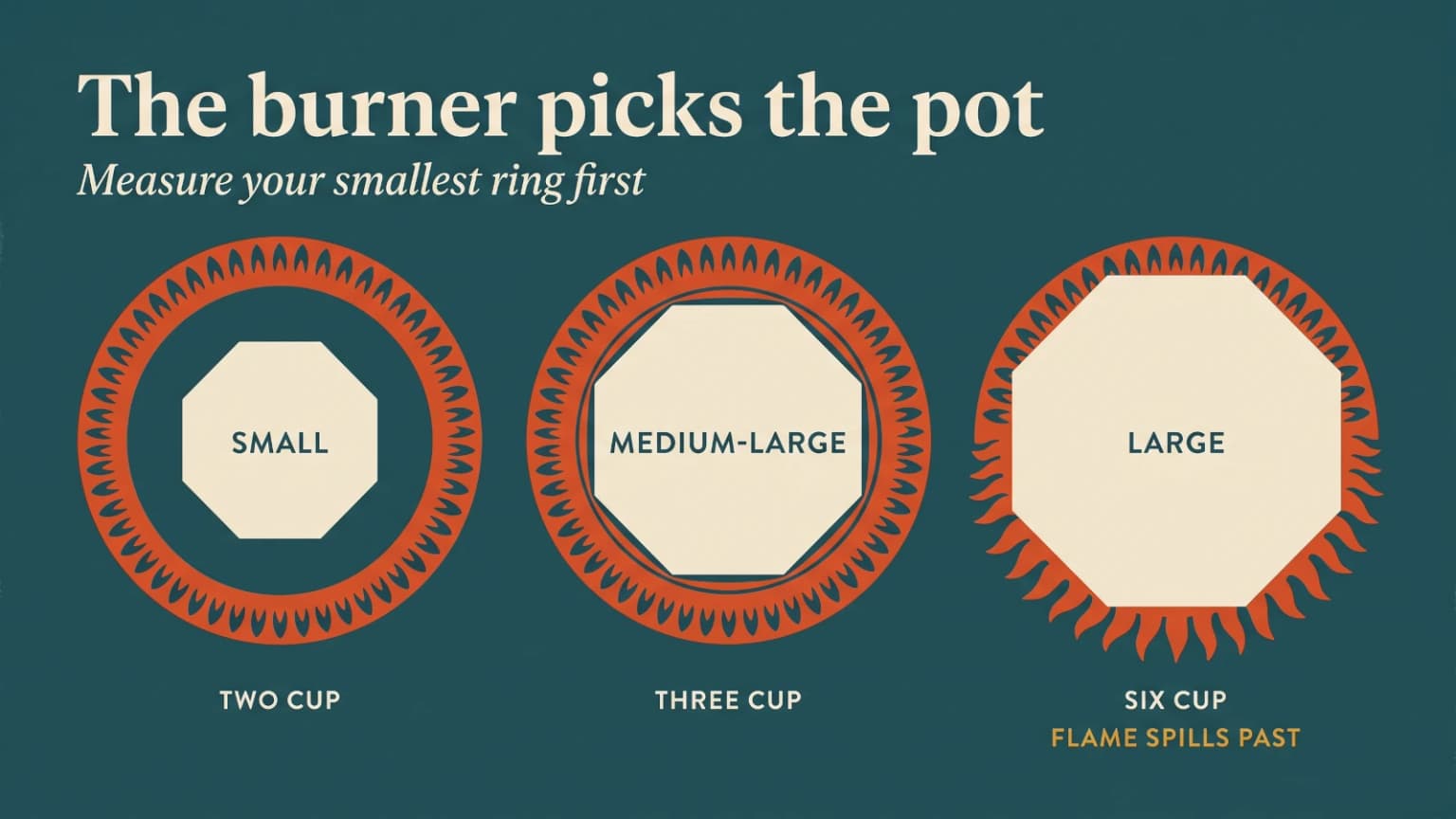
On a gas ring, the danger is a flame that is too big. Indian burners are built to heat a kadhai, and even the small ring on a two-burner hob can be wider than the base of a two cup moka pot.
Flame that spreads past the base climbs the sides of the boiler. It cooks the collector from outside, scorches the handle, hardens the gasket early, and stews the coffee that has already risen.
On an induction plate, the danger is the opposite. The pot must be magnetic, which rules out every aluminium body, and it must also be wide enough for the cooktop to see it at all.
Single-plate induction cooktops usually publish a minimum vessel diameter in the manual. A small moka pot base can sit under that figure, so the pot heats nothing and the display simply waits.
Seen from above, the small pot is the risky one. Flame that reaches past the base is heating the handle, not the water.
Here is the part no listing helps you with. Indian sellers rarely publish base diameter, and Indian hob makers rarely publish ring diameter.
So measure it yourself. Put a ruler across your smallest gas ring before you order, and treat any pot whose base is clearly narrower than that ring as a pot that needs a heat diffuser too.
Aluminium or steel, day to day
Aluminium or steel, day to day
What you are comparing
Aluminium body
Stainless steel body
Works on induction
No, unless the base is layered
Yes, subject to plate minimums
Heat behaviour
Heats fast, cools fast
Slower to heat, holds heat after
Washing rules
Hot water only, never detergent
Detergent is fine, no scouring
Hard water marks
Dulls and pits over years
Scale wipes off, body survives
What owners say it tastes like
Rounder once seasoned
Cleaner, sometimes sharper
Typical spend here
₹1,550 to ₹5,699
₹4,599 and up
Generalisations that hold across the seven pots below. Individual quirks are covered in each review.
If you cook on gas and always will, aluminium is not a compromise. It is the original design, it heats faster, and the four aluminium pots below cost less than the steel one.
If your kitchen runs on an induction plate, or you rent and cannot predict your next kitchen, steel removes the question permanently.
The 7 best moka pots in India
The lineup below runs from the deepest evidence base to the most specialised. It covers the gas-only Italian classics as well as the steel pots Indian listings file under coffee percolator.
Every link was verified live and in stock through Amazon's own product API on the day we published.
Ratings and review counts recorded on Amazon India at the time of writing. Prices move often, so use the buttons for the live number.
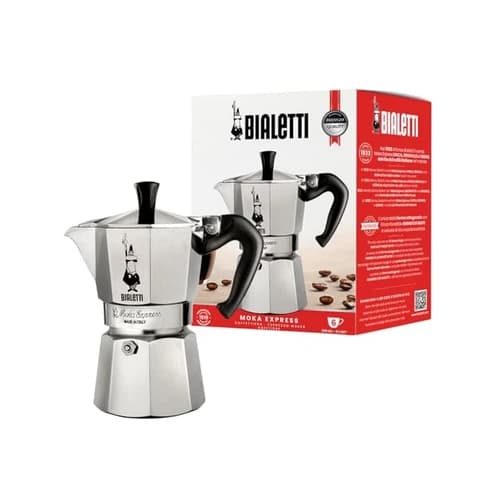
1. Bialetti Moka Express 3 Cup
Ask anyone in India who brews coffee on the stove which pot they own, and this is the name you will hear most.
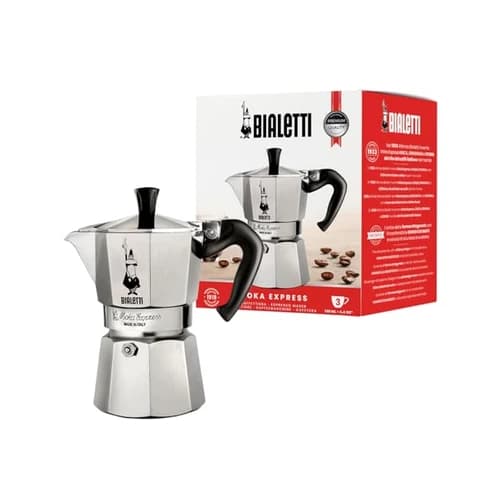
The Moka Express has been made in Italy since 1933, and the octagonal body, the moustachioed man on the side and the high curved spout have barely changed. Amazon India holds the range at 4.4 stars.
The three cup size is the one we point most people to. It yields roughly 130 to 150 ml, which is two small black coffees or three generous milk coffees.
It is also the safer bet on a small Indian gas ring. A two cup pot is narrow enough for the flame to reach straight past its base.
Bialetti Moka Express 3 Cup
Rated 4.4 from 103,164 ratings
The original Italian stovetop coffee maker, unchanged in shape since 1933, in the size that suits an Indian gas ring best.
Key details
Cast aluminium body, made in Italy
Yields roughly 130 to 150 ml per brew
Safety valve on the boiler wall
Replaceable silicone gasket and filter plate
Sold by Bialetti's official Indian importer
Heat-resistant handle and knob
What we like
The deepest owner evidence of any moka pot sold in India
A safer fit on a two-burner hob than the small 2 cup pots
Spares are ordinary consumables, not proprietary parts
Discounts of a third off list appear several times a year
Watch out for
Gas only, so an induction plate will not see it
Aluminium hates detergent, so washing is a rule not a chore
The handle sits in the flame path if you use too wide a ring
The owner reviews tell one story over and over. The first two brews are underwhelming, the pot then seasons, and by the second week people describe coffee they stopped buying outside.
Complaints cluster in two places. A minority receive a pot with the gasket seated badly, which hisses at the seam. A larger group wash it with dish soap and cannot work out why the cup tastes flat.
The honest weak point is the metal. Aluminium is why this pot heats fast and costs less than the steel one, and it is also why it can never go on induction, never go in a dishwasher, and never meet a scouring pad.
If your kitchen is gas and you accept a rinse-and-dry habit, none of that costs you anything. If you are the kind of person who puts everything in soapy water, buy the Venus instead and save yourself the argument.
At ₹3,399 against a list price well above it, this is the pot every other pot on this page has to justify itself against. Start here unless a specific reason below moves you.
2. Bialetti New Venus Induction 4 Cup
The New Venus Induction is Bialetti's answer to a kitchen with no flame in it, and in India that is an increasing number of kitchens.
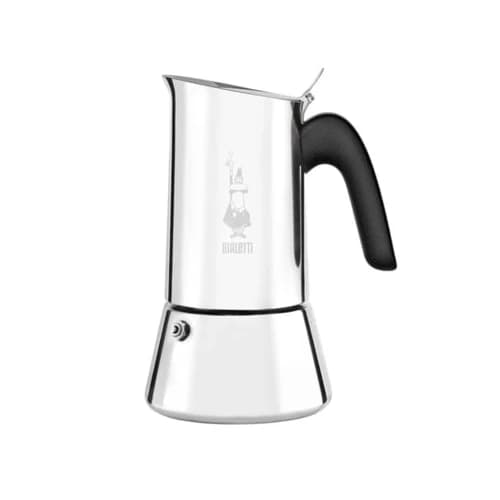
The body is stainless steel throughout, so it works on induction, gas, ceramic and electric coils. Amazon India holds it at 4.4 stars across 6,304 owners, which is the second deepest evidence on this page.
Steel changes the brew as well as the compatibility. It takes longer to come up to heat than aluminium, then holds that heat once it is there.
That stored heat is the thing to plan around. Take the pot off the ring the moment it starts to gurgle, because a steel boiler keeps pushing for several seconds after the heat is gone.
Bialetti New Venus Induction 4 Cup
Rated 4.4 from 6,304 ratings
The stainless steel Bialetti built for every hob, including induction, with a polished body that tolerates ordinary washing up.
Key details
Stainless steel body and base
Works on induction, gas, ceramic and electric
Yields roughly 175 to 200 ml per brew
Built-in safety valve, tested by the maker
Ergonomic heat-resistant handle
Sold by Bialetti's official Indian importer
What we like
Removes the hob question permanently, which matters if you rent
Detergent safe, so no special washing rules to remember
Holds heat well, which suits a slower, gentler brew
Second deepest review base of any pot here
Watch out for
Reviewers report a crevice under the collector that rinsing misses
A few owners report spotting in the first weeks, usually hard water
We want to be specific about the criticism, because it is real and it is repeatable. Reviewers who take the Venus apart report a recess where the column meets the upper chamber that a rinse under the tap does not reach.
Old grounds collect there, and old grounds are the fastest route to a stale, ashy cup. A soft brush once a week solves it entirely, but you have to know to do it.
The corrosion reports are the other thread worth knowing. A small number of owners describe spotting within the first fortnight, and hard water left standing in the boiler is the most likely explanation for most of them.
Buy the Venus if your hob is induction, if your household washes up without reading instructions, or if you simply want to stop thinking about the metal. At ₹4,599 it is the most expensive everyday pot here and the least demanding one.
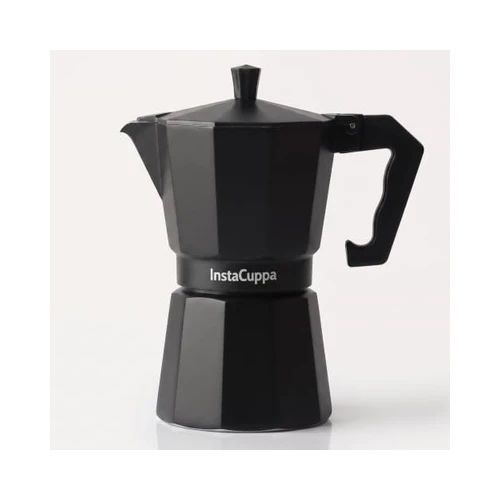
3. InstaCuppa 2-in-1 Moka Pot
The InstaCuppa 2-in-1 is the pot we keep recommending to people who want induction compatibility without a ₹4,599 outlay.
It is a 300 ml aluminium pot with an induction-ready base, sold directly by an Indian brand rather than an importer. Owners hold it at 4.3 stars across 974 ratings.
Two things make it the value pick rather than a compromise. It holds the same volume as a six cup Bialetti for ₹2,900 less, and it goes on either heat source.
The brand also runs its own Indian seller account, which in practice means a replacement is a support ticket rather than an international claim.
InstaCuppa 2-in-1 Moka Pot
Rated 4.3 from 974 ratings
A 300 ml aluminium moka pot with an induction-ready base, sold and supported in India, at roughly a third of the price of the steel Bialetti.
Key details
300 ml capacity, described as four to six cups
Aluminium body with an induction-compatible base
Works on gas, induction and electric hobs
Safety valve and heat-resistant handle
Sold and supported by an Indian brand
Full-size 300 ml body rather than a small pot
What we like
Cheapest route to an induction-capable moka pot here
A 300 ml body sits more securely on a large gas ring than a 90 ml pot
Same yield as the 6 Cup Bialetti for ₹2,900 less
Local seller, so replacements are quick
Watch out for
Aluminium body still needs the no-detergent washing rule
974 ratings is a shallow base next to the Bialettis
Finish and machining are a clear step below the Italian pots
Owner sentiment is warm with one recurring theme. People who arrive from a South Indian filter describe the coffee as much stronger than expected, and people who arrive from a cafe describe it as good rather than remarkable.
Both readings are fair. This is a well-made budget pot, not an Italian one, and the gap shows in the machining of the threads and the crispness of the pour rather than in the coffee itself.
The honest weak point is the evidence. 974 ratings is a real sample, but it is a hundredth of what stands behind the Moka Express, and this is a newer design with less time in Indian kitchens.
Buy the InstaCuppa if you cook on induction and ₹4,599 is too much, or if your only gas ring is a big one. Its larger body is genuinely easier to place there than a two cup Italian pot.
4. Bialetti Moka Express 6 Cup
The Moka Express 6 Cup is the same pot as our top pick with the volume that suits a household rather than a person.
It yields roughly 270 to 300 ml, which is where the cup labelling stops flattering and starts under-selling. Two black coffees, or six to seven Indian-style milk coffees from one brew.
That second number is the one nobody publishes. If your morning ends with hot milk and sugar in the glass, this pot serves a family and the three cup version does not.
It shares the 4.4 star rating and the 103,164 review base with our top pick, because Amazon India pools ratings across the Moka Express sizes.
Bialetti Moka Express 6 Cup
Rated 4.4 from 103,164 ratings
The household size of the Italian original, yielding around 290 ml, which is six or seven Indian-style milk coffees from a single brew.
Key details
Cast aluminium body, made in Italy
Yields roughly 270 to 300 ml per brew
Wider base than the 3 Cup, easier on a large ring
Replaceable silicone gasket and filter plate
Safety valve on the boiler wall
Sold by Bialetti's official Indian importer
What we like
One brew covers a family of milk-coffee drinkers
Wider base tolerates a bigger burner than the small pots
Same proven design and spares as the 3 Cup
Costs only ₹1,299 more than the 3 Cup for double the yield
Watch out for
Gas only, no induction path at all
Half-filling a moka pot brews a worse cup, so size it honestly
Its rating is pooled with other sizes, not measured alone
There is one rule that decides whether this is the right size for you, and it catches a lot of people. A moka pot is designed to run full, and half-filling the basket ruins the brew.
Water that has room to spare rushes through a shallow bed of coffee, and the cup comes out thin and sour. If you drink one small coffee on most days, the three cup pot is the better purchase even though this one looks more capable.
Owner complaints here mirror the smaller model, with one addition. The wider pot takes noticeably longer on a low flame, and impatient owners turn the gas up, which is exactly the mistake that scorches the coffee.
The reward for patience is the only pour on this page big enough to fill a flask for the office without brewing twice.
Buy the 6 Cup if two or more people drink coffee every morning, or if milk coffee is the house default. Otherwise the 3 Cup is ₹1,299 cheaper and a better cup for one.
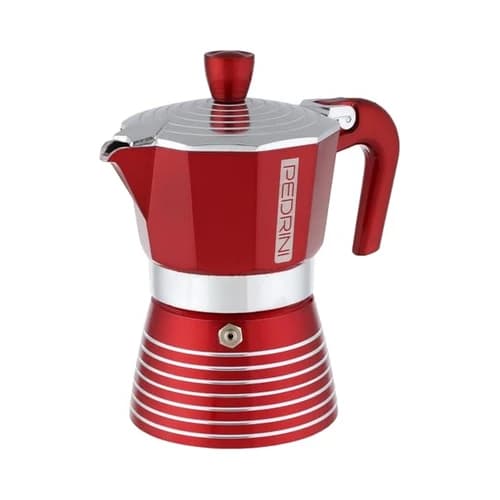
5. Pedrini Infinity 3 Cup
Pedrini is the Italian name most Indian buyers have never heard, and the Infinity 3 Cup is the pot that makes the case for it.
The company has been making kitchenware in Italy since 1941, and this pot holds 4.4 stars across 1,370 Indian ratings, matching the Bialetti average on a smaller sample.
The proposition is simple. It is an Italian-made three cup aluminium moka pot at ₹2,705, which is ₹694 under the Moka Express in the same size.
The finish is the reason to want it rather than merely accept it. The Infinity range is finished in colour rather than left as bare polished aluminium, which is a quieter object on an Indian kitchen shelf.
Pedrini Infinity 3 Cup
Rated 4.4 from 1,370 ratings
An Italian-made three cup moka pot in coloured aluminium, matching Bialetti on owner rating at ₹694 less in the same size.
Key details
Aluminium body, made in Italy since 1941
Yields around 150 ml per brew
Coloured exterior finish rather than bare metal
Safety valve and moulded heat-resistant handle
Standard gasket and filter plate sizing
Three cup base suits a small gas ring
What we like
Matches the Bialetti 4.4 star average at a lower price
Genuinely Italian made, not a lookalike at a lookalike price
The coloured finish hides the water marks bare aluminium shows
A real alternative if you do not want the obvious pot
Watch out for
1,370 ratings is a fraction of the Bialetti evidence base
Gas only, like every aluminium pot here
Spares are easy to find by size but not by brand in India
Owners describe the brew as indistinguishable from a Bialetti of the same size, which is what we would expect. A moka pot is a boiler, a funnel, a basket and a gasket, and Italian factories have been making all four to the same tolerances for decades.
Where reviews differ from the Bialetti is in the small stuff. The coloured coating attracts a few complaints about marking near the flame, and a handful of owners find the handle shape less comfortable than the classic wedge.
The honest weak point is service rather than the pot. Bialetti gaskets are sold everywhere in India as a named spare; Pedrini gaskets are not, so you will be buying by diameter rather than by brand.
Buy the Infinity if you want the Italian build without the Italian icon, or if you would rather put the ₹694 you save into better coffee. On the evidence, you give up nothing in the cup.
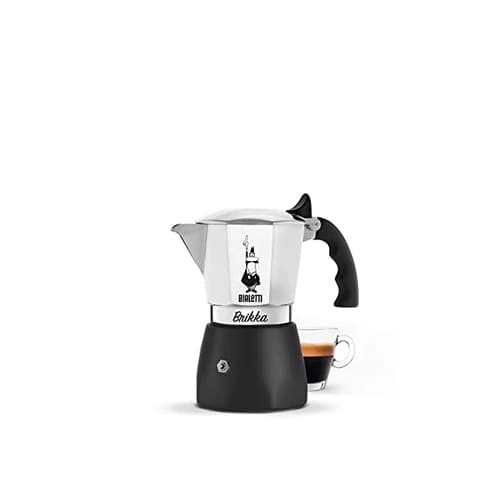
6. Bialetti New Brikka 2 Cup
The New Brikka is the pot for the person who has read that a moka pot cannot make espresso and would like to argue about it.
Bialetti fits a weighted pressure valve to the top of the column. Pressure builds under it until it lifts, and the coffee arrives in a burst rather than a stream, carrying a thick layer of foam.
Owners rate it 4.2 stars across 7,890 ratings, which is the third deepest evidence here and a genuine verdict rather than a provisional one.
The foam is real, and it is not crema in the espresso sense. Reviewers who taste both describe the Brikka layer as bubbly and quick to collapse, closer to what a pressurised basket produces than to a pulled shot.
Bialetti New Brikka 2 Cup
Rated 4.2 from 7,890 ratings
The moka pot with a weighted pressure valve on the column, which delivers the brew in a burst and builds a thick foam layer on top.
Key details
Weighted pressure valve on the delivery column
Aluminium body, made in Italy
Yields around 100 ml per brew
Builds a visible foam layer on the pour
Standard Bialetti gasket and filter plate
Sold by Bialetti's official Indian importer
What we like
The richest, heaviest cup of any pot in this guide
Thick foam layer that no ordinary moka pot produces
Deep review base for a specialist product
Excellent base for a home cappuccino
Watch out for
Foam is bubbly and short-lived, not espresso crema
Bialetti does not list the pressure valve as a spare part
Owners report the valve sticking, which burns the brew
The mechanism explains both the appeal and the complaints. Coffee waits under a closed valve while pressure builds, and coffee that waits in a hot boiler keeps extracting.
That is why the Brikka rewards a lower flame than any other pot here, and why owners who treat it like a Moka Express report a burnt taste.
The valve is the honest weak point, and it is a structural one. Owners report it sticking after months of use, and Bialetti does not list it among the spare parts it sells, so the sensible assumption is that the valve is not serviceable.
That is a real consideration on a ₹5,699 pot when a ₹3,399 Moka Express has nothing on it that can stick.
Buy the Brikka if body and foam are what you are chasing, and if you will keep the flame low and clean the valve seat properly. If you mostly drink milk coffee, the foam disappears into the glass and you have spent ₹2,300 on nothing.
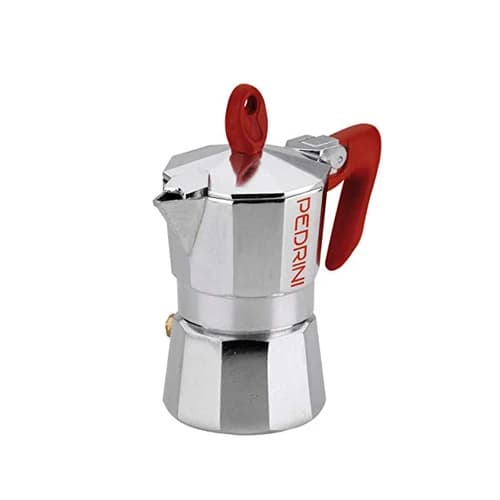
7. Pedrini Eco Moka 2 Cup
The Eco Moka 2 Cup is the cheapest way into a genuinely Italian-made pot in India, and it is here because that price point is otherwise a wasteland.
At ₹1,550 it sits among dozens of unbranded ₹500 pots, and it is the only one at this end of the shelf with a named factory behind it and 4,537 owner ratings.
We have to be straight about the number. It holds 4.0 stars, the lowest average of any pot we are recommending, and we would not include it if the review base were shallow.
It is not shallow. 4,537 ratings is a settled verdict, and reading the critical ones shows a clear pattern rather than a random spread of faults.
Pedrini Eco Moka 2 Cup
Rated 4.0 from 4,537 ratings
The cheapest Italian-made pot on the Indian shelf, at 90 ml, with a settled 4.0 star verdict across more than four thousand owners.
Key details
Aluminium body, made in Italy
Yields around 90 ml, one strong cup
Coloured handle and knob on a polished body
Safety valve on the boiler
Standard two cup gasket sizing
Lowest entry price of any named pot here
What we like
A real Italian pot for the price of an unbranded one
Deep review base for a product this cheap
Small enough to travel, hostel rooms included
One brew is exactly one strong coffee, so nothing is wasted
Watch out for
A 4.0 average is the lowest we are recommending
Its narrow base is the worst fit for a large Indian gas ring
At 90 ml it makes one drink, and it cannot be stretched
The critical reviews concentrate on two things, and one of them is not the pot's fault. Owners report leaking at the seam, which is almost always a gasket seated crooked or a pot tightened over a stray ground on the thread.
The second is more serious and is the reason for the rating. The small size makes it the most flame-sensitive pot here, and on a standard Indian burner the flame reaches straight past the base and up the sides.
That is exactly the failure our fit map above describes, and it produces the scorched handles and burnt-tasting coffee that fill this pot's one-star reviews.
If you own a small simmer ring, or you are willing to buy a heat diffuser plate for a couple of hundred rupees, most of those reviews stop applying to you.
Buy the Eco Moka if you drink one coffee a day, you want Italian metal, and ₹1,550 is the budget. Just do not put it on a burner built for a pressure cooker.
Does a moka pot make real espresso?
No, and every listing in this category stretches the word. This is worth understanding before you spend ₹5,699 chasing something a stovetop espresso maker cannot do.
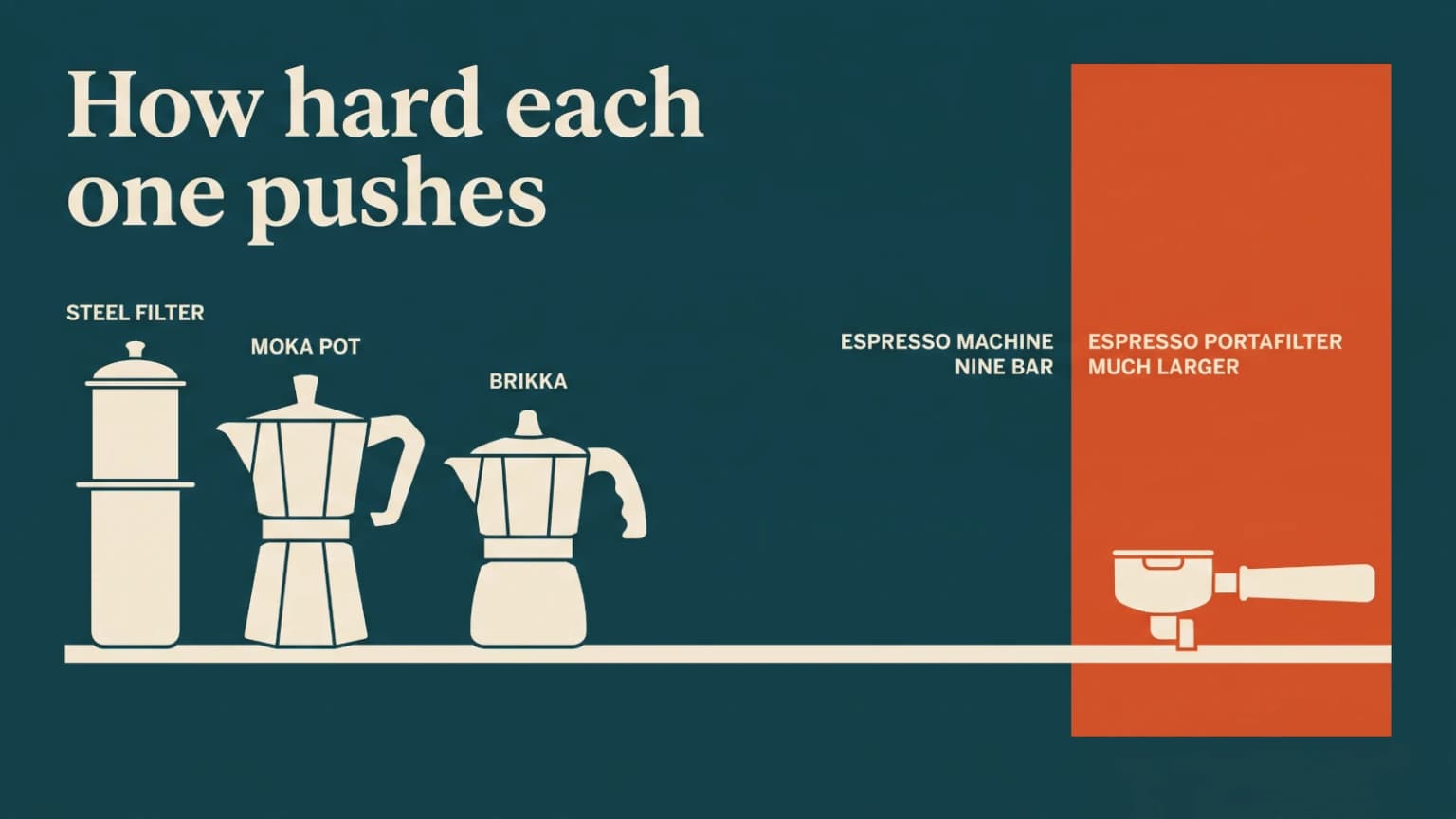
Espresso is defined by pressure, conventionally around nine bar pushed through a fine, tamped bed of coffee in about thirty seconds. That pressure is what emulsifies coffee oils into the dense layer called crema.
A moka pot is a mild machine by comparison. It builds pressure from steam in a sealed boiler, and it is commonly described as reaching somewhere around one to two bar before the water lifts.
Four brewers on one axis. The gap between the moka pot and an espresso machine is not a detail, it is the whole difference.
That gap explains everything you will read in owner reviews. A moka pot makes a concentrated, syrupy coffee that is stronger than filter and weaker than espresso, and the foam it produces is thin and quick to fade.
The New Brikka narrows the gap without closing it, by holding the brew back behind a weighted valve until pressure rises further.
Where the pressure actually lands
Where the pressure actually lands
Brewer
What moves the water
What lands in the cup
Foam on top
South Indian filter
Gravity alone
Sweet, mellow decoction
None
Moka pot
Steam pressure in a sealed boiler
Concentrated and syrupy
Thin, fades fast
Brikka
The same, held behind a weighted valve
Heavier and rounder still
Thick but bubbly
Espresso machine
A pump at roughly nine bar
Dense, 25 to 30 ml shot
True crema
Moka pot pressure is widely described rather than published by makers, so treat the figure as a range. The ordering is not in dispute.
The practical reading is this. If you want a strong black coffee, a base for a milk drink, or something to pour over ice, a moka pot delivers it for under ₹6,000.
If you want a real shot with real crema, no pot on this page will get you there, and a pump machine is the honest answer. Our guide to the best coffee machines with grinders in India covers that route.
Moka pot or South Indian filter?
Most Indian buyers already own the other thing, or grew up with it. Nobody writing about moka pots seems willing to compare them, so we will.
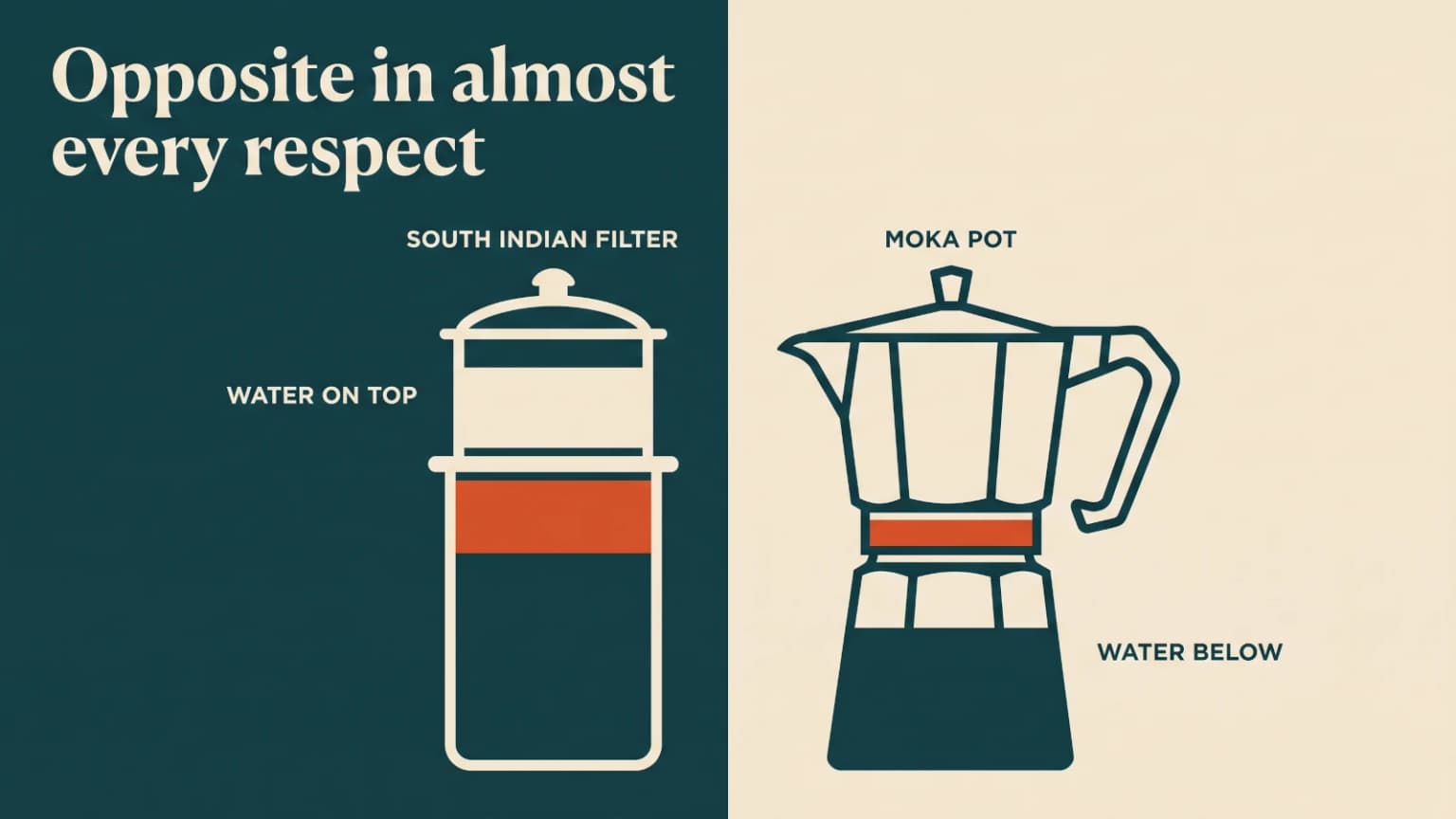
A South Indian filter is two stacked steel cylinders. Fine coffee sits in the upper chamber under a perforated press, hot water goes on top, and gravity pulls decoction into the lower chamber over fifteen minutes or more.
A moka pot is the opposite in almost every respect. Water sits below the coffee, heat does the work, and the whole brew is finished in about five minutes.
Two ways to reach a strong Indian coffee. One works downward with gravity and time, the other upward with heat and pressure.
The difference in the glass is not subtle. Decoction is mellow, faintly sweet, and built to be diluted heavily with hot milk, which is why chicory belongs in it.
Moka coffee is sharper and more concentrated. It carries acidity that the filter deliberately mutes, and it makes a milk coffee that tastes more like a cafe cappuccino than like kaapi.
Speed is the honest tie-breaker for a lot of households. A filter needs to be set up the night before or twenty minutes before you drink; a moka pot goes from cold to poured while you find your keys.
Cleaning splits the other way. A filter rinses in ten seconds; a moka pot has a basket, a funnel, a gasket and a filter plate, and skipping that ritual is what makes the third week taste worse than the first.
Our reading, plainly. If you drink kaapi with plenty of milk, keep the filter and add a moka pot for the days you want something stronger.
If you want black coffee, or you want to stop paying cafe prices for a cappuccino, the moka pot replaces the filter rather than joining it.
How many cups does a moka pot make?
Fewer than the box says, and more than you expect. The number on the carton is the most misleading figure in this category, and it misleads in both directions.
A moka cup is an Italian espresso cup, somewhere near 50 ml. A three cup pot does not make three of anything you drink from at home.
Read the millilitres instead. They are the number every one of our picks publishes.
What each size really pours
What each size really pours
Marked size
Approximate yield
Black coffees
Indian-style milk coffees
2 cup
About 90 to 100 ml
One strong cup
Two glasses
3 cup
About 130 to 150 ml
Two small cups
Three glasses
4 cup
About 175 to 200 ml
Two generous cups
Four glasses
6 cup
About 270 to 300 ml
Two to three cups
Six to seven glasses
300 ml pot
300 ml as marked
Three small cups
Six to seven glasses
Yields are approximate and makers describe them slightly differently. Milk-coffee counts assume 40 to 50 ml of moka concentrate per glass.
Here is the part that surprises people. The cup number flatters the pot if you drink black coffee and undersells it badly if you drink milk coffee.
Nobody gets six mugs out of a six cup pot. But at 40 to 50 ml of concentrate in a glass of hot milk, six or seven servings from one brew is entirely normal, and that is how most Indian households will use it.
So size it by the drink. One black coffee a day means a 2 or 3 cup pot; a family of milk-coffee drinkers means the 6 Cup or the 300 ml InstaCuppa.
The case against buying a moka pot
We would be writing an advertisement rather than a guide if we skipped this, so here is the case for keeping your money.
The first argument is the strongest. A moka pot is a manual device that punishes inattention, and a bad moka brew is genuinely unpleasant, ashy and thin at the same time.
An automatic machine does not care whether you are awake. If your mornings are chaotic, or nobody in the house will learn a routine, a capsule machine will produce a better average cup than a moka pot in the same kitchen.
The second argument is about the coffee, not the pot. A moka pot at ₹3,399 fed supermarket powder makes worse coffee than a ₹500 filter fed a good blend.
Nothing about this device improves your beans. It concentrates whatever you put in it, including staleness and a grind that does not suit it.
The counter-argument is short and it is why we still recommend these. For under ₹6,000 with no electricity, no pump, no descaling schedule and nothing to service, a moka pot makes coffee that beats every chain cafe in the country.
It is the highest ratio of cup quality to money and complexity that home coffee offers, and ninety years of Italian kitchens agree.
What a strong cup really costs here
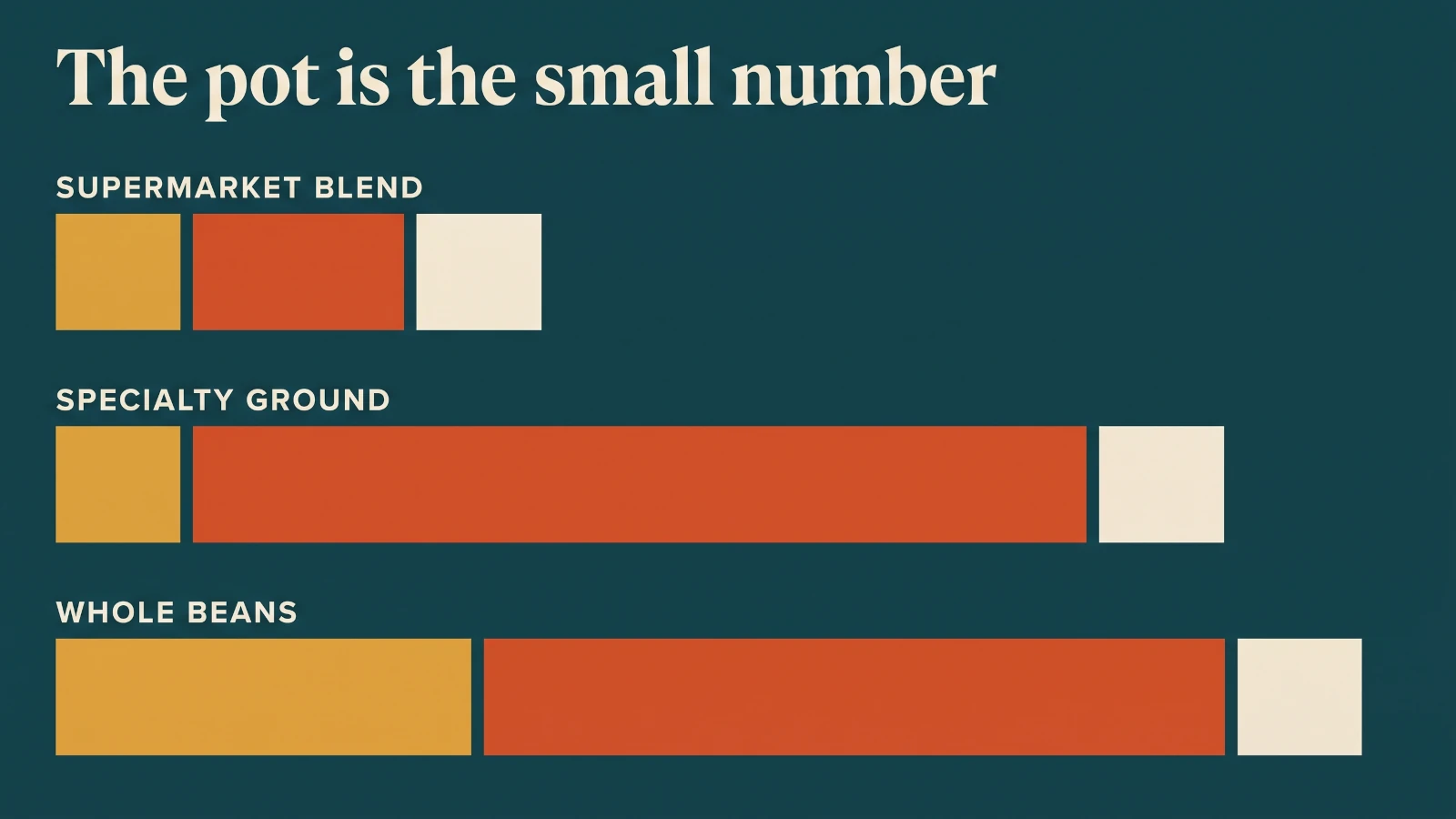
The pot is the small number. What you spend on coffee over a year dwarfs it, and the route you buy that coffee through moves the figure by a factor of three.
We worked this out with real Amazon India prices at the time of writing and a 17 gram dose, which is roughly what a three cup pot takes.
The kit you buy once is the thin band at the left of every bar. What you feed it is the purchase you keep making.
One brew, three ways to buy coffee
One brew, three ways to buy coffee
How you buy coffee
Typical Indian price
Coffee per brew
What you trade
Supermarket chicory blend
₹340 to ₹505 per 500 g
About ₹12 to ₹17
Ground for decoction, often too fine
Indian specialty, ground to order
₹618 to ₹700 per 250 g
About ₹42 to ₹48
Costs three times as much
Whole beans and your own grinder
Same bean price, grinder once
About ₹42 to ₹48
One more purchase to make
Calculated from Amazon India listings at the time of writing on a 17 gram dose. Prices move, and festive sales move them a long way.
Add roughly ₹6 of toned milk to any of those and you have the real number. A strong milk coffee at home costs somewhere between ₹18 and ₹54, depending entirely on which bag you buy.
Set that against a cappuccino in a metro chain, which starts around ₹200. Even on the expensive route, the ₹3,399 Moka Express clears its own price inside about twenty cafe visits you skip.
The middle route is where we would put most people. An Indian specialty roaster will grind a bag for moka or French press on request, which removes the single most common cause of a bad brew.
The third route is better again and it needs one more thing. A hand grinder turns whole beans into a grind you control, and our guide to the best coffee grinders in India covers what that costs.
When to buy
Bialetti pricing in India swings hard, and the listings we verified were running roughly a third below their stated list price.
Gaps that size open and close several times a year around the Great Indian Festival, Prime Day and the Republic Day sales.
Our practical advice is simple. If the pot you want is already discounted by a quarter or more, buy it; if it is at full list and no sale is near, waiting rarely costs you anything.
One caution on the cheap end. A ₹500 lookalike with no brand, no named seller and no published safety valve is not a bargain, it is a pressure vessel from an unknown factory.
Brewing a moka pot on a gas flame
Nearly every bad moka brew comes from one of three things: the wrong grind, too much flame, or leaving the pot on the heat too long.
The routine below removes all three. It takes about five minutes once you know it.
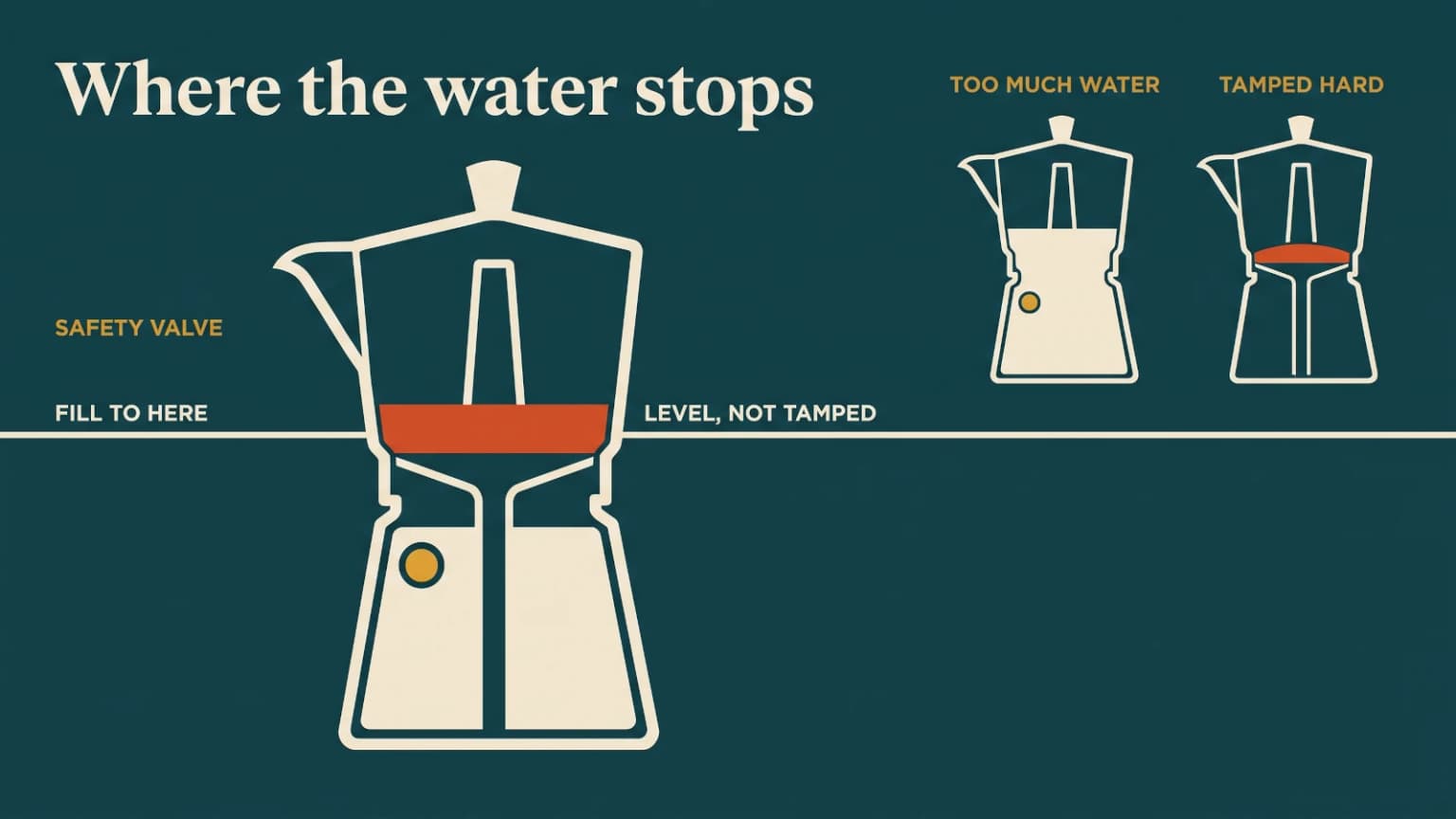
Two lines decide the brew. Water below the valve, coffee level and untamped, and the pot does the rest.
A moka brew, step by step
1
Fill the boiler to just below the safety valve
Use hot water from your kettle if you have it. Starting hot shortens the time the coffee spends sitting above a heating boiler, which is where bitterness comes from.
Tip The valve is a hard ceiling, not a guideline. Water above it cannot vent if pressure spikes.
2
Fill the basket level and do not tamp it
Spoon in the grounds, level the top with a finger, and stop. A moka pot has no need for compression and tamping raises pressure until the brew turns harsh.
Watch out A grind meant for a South Indian filter is usually too fine here. If the pot spits or stalls, go coarser before you change anything else.
3
Wipe the rim and assemble hand-tight
Clear any stray grounds off the boiler rim and the gasket seat, then screw the halves together firmly by hand. A single ground on the seal is the usual reason a pot hisses.
4
Smallest ring, medium flame, lid open
Put the pot on the smallest burner you have and keep the flame inside the base. Leave the lid open so you can see the coffee arrive.
Tip If the flame reaches past the base, fit a heat diffuser plate. It costs a couple of hundred rupees and it saves the handle.
5
Watch the stream, not the clock
A good brew arrives as a slow, dark, honey-thick stream. If it jets out pale and fast, your flame is too high; if nothing comes for minutes, the grind is too fine.
6
Pull it off at the first gurgle
The moment the stream turns pale and starts to splutter, take the pot off the heat. Everything after that sound is steam stripping bitterness out of the spent grounds.
Tip Stand the base in a shallow dish of cool water for a second or two to stop the extraction dead.
Two habits separate a good pot from a great one after that. Pour immediately rather than letting the coffee sit on hot metal, and stir the pot before pouring so the first and last of the brew mix.
Starting with hot water is easier if you own a kettle with a narrow spout, since the boiler fills below the valve without splashing. Our gooseneck kettle guide for India covers the ones worth buying.
For a milk coffee, pour 40 to 50 ml of the concentrate into a glass and top it with hot milk. That ratio is what makes a moka pot taste like a cafe rather than strong kaapi. Our coffee to water ratio guide gives the same figure for every other brewer.
Keeping a moka pot alive in India
A moka pot has no electronics, no pump and no board to fail. What kills them here is water and neglect, in that order.
The routine below is shorter than its reputation, and it is the difference between a pot that lasts two years and one that outlives the kitchen.
The care rhythm that suits Indian water
1
After every brew: rinse hot and dry fully
Knock out the puck, rinse all three parts in hot water, and dry them before storing. Aluminium pots get water only, no detergent and no scouring pad.
Tip Leaving water standing in a steel boiler overnight is the most likely cause of the spotting owners report.
2
Weekly: lift the filter plate
Unscrew or prise out the perforated plate under the gasket and clear the underside. This is where old oils collect, and it is the crevice reviewers flag on the Venus.
Watch out Never put a moka pot in a dishwasher, aluminium or steel. Dishwasher salts dull the metal and shorten gasket life dramatically.
3
Monthly in hard water: descale the boiler
If your water leaves white marks on vessels, fill the boiler with a mild descaling solution, leave it briefly, then rinse thoroughly and brew one throwaway pot.
Tip Filtered water in the boiler removes most of this chore, and it makes a noticeably cleaner cup.
4
Twice a year: change the gasket
Gaskets harden with heat and stop sealing, which shows up as hissing at the seam or a brew that never quite finishes. Replace by cup size and fit the filter plate with it.
5
Monsoon: store the parts unscrewed
Humid months are when a stored pot corrodes and a compressed gasket sets. Keep the boiler, funnel and upper chamber apart on the shelf, fully dry.
The pattern in the negative reviews is depressingly consistent. Pots described as ruined are very often pots that were washed with detergent, stored wet, or run on a gasket that had gone hard two years earlier.
Budget five minutes a week and a ₹200 gasket a couple of times a year, and every pot in this guide becomes a decade-long object rather than an appliance.
Which moka pot should you buy in 2026?
Seven pots is a shelf, not an answer, so here is the answer.
We ranked these on owner evidence, build, hob compatibility, spare parts and the honesty of what each one claims to do. Then we asked the only question that decides it: what is under the pot, and how many people are drinking?
The three we recommend first
Our pick
Moka Express 3 Cup
₹3,399
Your hob
Gas
Best at
Evidence and value together
Yield
About 130 to 150 ml
Weak spot
No induction, ever
New Venus Induction
₹4,599
Your hob
Induction or anything
Best at
Living with real households
Yield
About 200 ml
Weak spot
A crevice to brush weekly
InstaCuppa 2-in-1
₹1,799
Your hob
Induction or gas
Best at
Volume for the money
Yield
300 ml
Weak spot
Shallow review base
The three we recommend first
Specification
Our pick
Moka Express 3 Cup
₹3,399
New Venus Induction
₹4,599
InstaCuppa 2-in-1
₹1,799
Your hob
Gas
Induction or anything
Induction or gas
Best at
Evidence and value together
Living with real households
Volume for the money
Yield
About 130 to 150 ml
About 200 ml
300 ml
Weak spot
No induction, ever
A crevice to brush weekly
Shallow review base
The best moka pot in India, then, is a smaller question than it looks. Buy the size that matches the mornings you actually have rather than the ones you imagine.
A pot that runs full every day makes better coffee than a bigger one that runs half empty.
You will find the rest of our stovetop and hand-brew coverage under manual brewing, and the grind is where we would spend the next rupee.
Frequently asked questions
Is a moka pot better than a South Indian filter?
Neither is better. They make different drinks, and most Indian kitchens have room for both.
A South Indian filter drips slowly and gives you a mellow, chicory-sweet decoction built for hot milk. A moka pot pushes hot water through the grounds under mild pressure in about five minutes and gives you something sharper and more concentrated.
If you drink kaapi with milk and sugar every morning, the filter is hard to beat. If you want an Italian-style black cup, or a base for a cappuccino at home, the moka pot is the one that gets you there.
Can I use filter coffee powder in a moka pot?
You can, and plenty of Indian owners do. It brews a familiar, sweet cup because the chicory carries body.
The catch is grind size. Most filter coffee powder is ground fine for slow decoction, and a fine grind in a moka pot chokes the basket, raises the pressure and pushes bitter coffee through the top.
If your brew tastes burnt or the pot spits, ask your seller for a coarser grind, or move to a bag ground for moka or French press.
Which moka pot is best for induction in India?
Of our picks, the Bialetti New Venus Induction 4 Cup and the InstaCuppa 2-in-1 are the two built for it, the Venus in stainless steel and the InstaCuppa with an induction-ready base under an aluminium body.
There is a catch nobody mentions. Single-plate induction cooktops usually state a minimum vessel diameter in the manual, and a small moka pot base can sit under it.
Check that number in your own cooktop manual before you order, and prefer the larger pot if you are close to the limit.
Is an aluminium moka pot safe to use?
Food-grade aluminium cookware is standard and legal in both Italy and India, and the Moka Express design has been in daily European use since the 1930s. We found no credible evidence that a moka pot is a meaningful source of dietary aluminium.
What is well established is that aluminium reacts with strong detergent, dishwasher salts and abrasive scrubbing, which pits the metal and dulls the cup.
If the question still bothers you, buy stainless steel and stop thinking about it. That is a legitimate reason to choose the Venus.
How many cups does a 6 cup moka pot actually make?
Around 270 to 300 ml in total, which is roughly two small black coffees rather than six mugs. The "cup" on the box is an Italian espresso-size cup, not an Indian one.
For milk coffee the same pot goes much further. At 40 to 50 ml of moka concentrate per glass, a six cup pot fills six or seven Indian-style milk coffees comfortably.
Buy by millilitres and by the drink you actually make, never by the cup number printed on the carton.
Are Bialetti moka pots on Amazon India genuine?
The Bialetti listings we verified are sold by the brand's official Indian importer rather than by an anonymous reseller, and the listings name that importer and the warranty behind it.
That matters more here than in most categories, because a moka pot is a simple object that is easy to copy and hard to tell apart in a photograph.
Read the seller line before you pay. If the coffee maker is cheap and the seller is unnamed, you are buying a lookalike with a different gasket and a different safety valve.