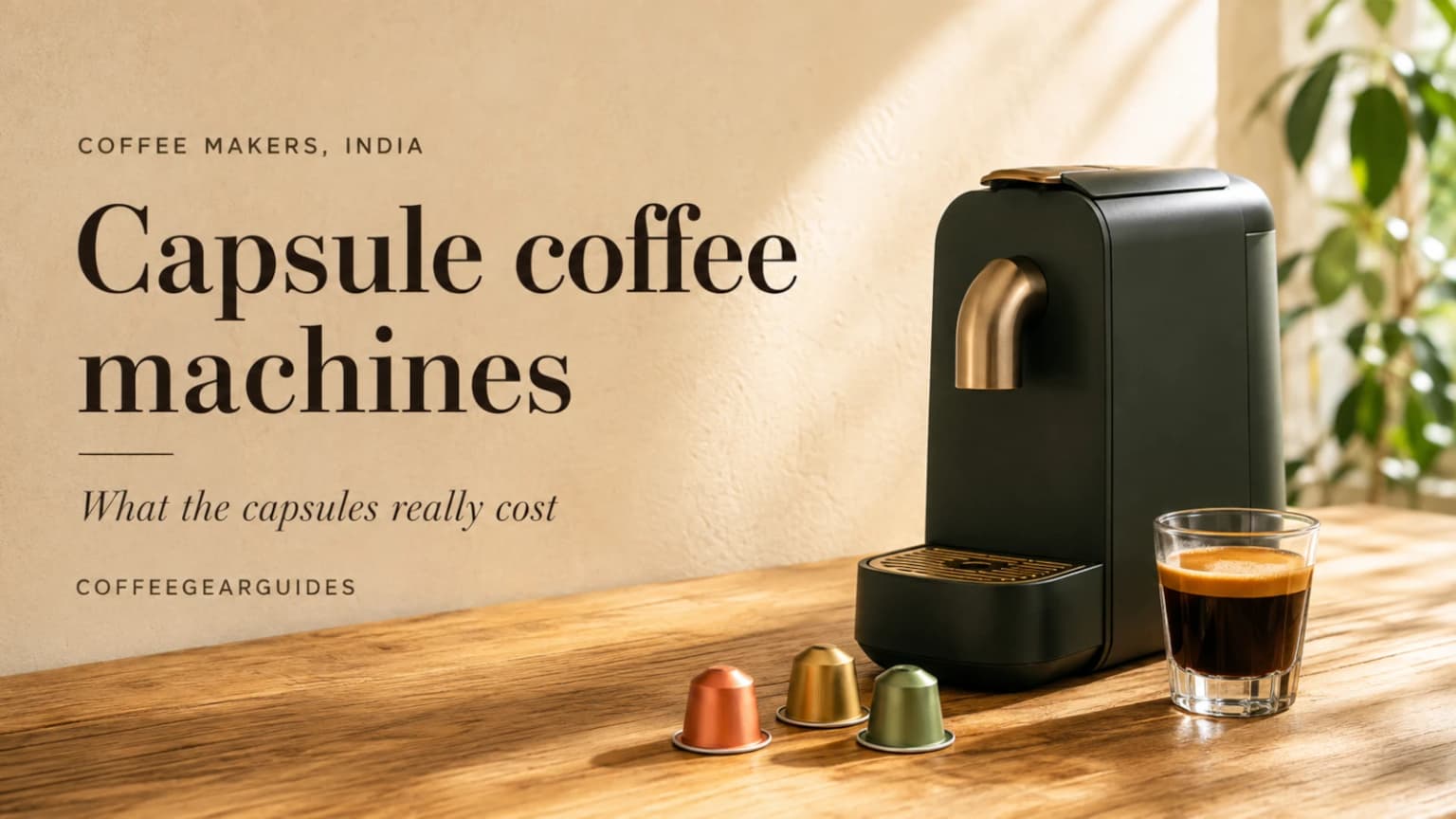
6 Capsule Coffee Machines for Indian Kitchens in 2026
The capsules cost more than the machine. We priced both on Amazon India, then ranked six capsule coffee machines for 2026, from ₹7,604 to ₹22,699.
By the CoffeeGearGuides team · India · Updated Aug 7, 2026 · 35 min read
On this page18
The best capsule coffee machine in India is not the one with the nicest buttons. It is the one attached to a capsule you can still buy cheaply in three years.
Capsule machine, coffee pod machine, single-serve brewer: the name changes with the brand, but every one on this page brews in about thirty seconds and needs no skill at all.
That part of the category is solved, and it has been solved for a decade.
What is not solved is the running cost, and almost nobody writing about these machines in India mentions it.
So we did the arithmetic instead. We priced every coffee capsule we could verify on Amazon India, from Nespresso's own aluminium capsules down to the ones Indian roasters fill.
The cost per cup runs from about ₹43 to about ₹99, and that single choice outweighs the machine you put it in.
We also read the specification sheets, the Indian warranty terms, and the full range of owner reviews rather than the flattering top few.
This 2026 guide covers the six machines that survived that process, the five we cut and why, and the one question that decides everything: which capsule system are you actually buying into.
How we chose these capsule machines for 2026
We are a research-led site and we think that is a strength when it is done in the open. You can read exactly how we work on our about page.
The short version is that we do not trust a single launch review, ours or anybody else's. We read the dull evidence instead, and we read the critical reviews hardest.
Three star reviews get the most attention, because that is where owners describe real flaws without either rage or evangelism.
Three rules shaped this list. Every machine had to be live and in stock on Amazon India with a verifiable price on the day we published.
Every machine had to clear a 4.0 star average with a review base deep enough to mean something. And every machine had to sit on a capsule format you can still buy from more than one seller.
We started with eleven candidates and cut five. That is worth spelling out, because a guide that recommends everything it looked at is not a guide.
One machine held a single one-star review, which is not evidence of anything. Nespresso's ₹33,699 Lattissima One held 3.8 stars across five reviews, which is no better.
The Vertuo Next was the interesting cut. It sits at 3.9 stars across 1,949 owners, so that verdict is settled rather than provisional, and we come back to what those owners ran into.
Two more went for being beaten by a machine already on the list. The AGARO Galaxy at ₹6,649 is dominated by the COSTAR ₹955 above it, which has a higher rating, four times the reviews, and takes ground coffee too.
That thinness at the top of the market is itself a finding. In India, the well-evidenced capsule machines live between roughly ₹7,500 and ₹19,000, and the expensive ones barely sell on Amazon at all.
Which capsule system are you buying?
Every guide to this category compares bar pressure and water tanks. In India the decision that actually costs you money is a different one, and it is made the moment you buy the machine.
You are not choosing a coffee machine. You are choosing a capsule format, and formats differ enormously in how many people are allowed to fill them.
Three formats matter in the Indian market, and they behave nothing alike.
Nespresso Original is an open format. Nespresso sells capsules for it, and so do Blue Tokai, Coffeeza, Lavazza and Starbucks, all of which we found in stock on Amazon India.
Nespresso Vertuo is a closed one. Nespresso is effectively the only supplier, and Indian distribution is thin enough that when we checked, six of the seven Vertuo machines we found on Amazon India were out of stock.
Nescafé Dolce Gusto sits awkwardly in between. Capsules exist, but a striking share of the Indian listings are parallel imports, with the words "Imported-UK" or "Imported-USA" printed in the title.
One of these formats lets many brands compete for your money. The other two do not.
Three capsule formats in the Indian market
Three capsule formats in the Indian market
What you are comparing
Nespresso Original
Vertuo and Dolce Gusto
Who can sell you capsules
Nespresso and many others
Nespresso only, or importers
Indian roasters fill it
Blue Tokai, Coffeeza and more
None we could verify
Realistic cost per cup
₹43 to ₹99
₹53 to ₹99, less predictable
Machines available here
Nespresso plus Indian brands
Mostly out of stock
If your usual capsule vanishes
Switch seller, keep the machine
You wait for the importer
Price direction over time
Competition pushes it down
Set by one supplier
Compiled from Amazon India listings verified at the time of writing. Availability in this category moves quickly, so check before you commit.
Our reading is not subtle. Buy into Nespresso Original, whether the machine on your counter says Nespresso, Coffeeza or COSTAR on the front.
It is the only format where the price of your daily cup is set by competition rather than by one company. Every machine we recommend below takes it.
The 6 best capsule coffee machines in India
The lineup below runs from the deepest evidence base to the most expensive. Every link was verified live and in stock through Amazon's own product API on the day we published.
Ratings and review counts recorded on Amazon India at the time of writing. Prices move; use the buttons for the live number. Amazon.in prices as of 15/09/2026. Details
1. Nespresso Essenza Mini
Some machines earn a ranking on features. This one earns it on the sheer weight of evidence behind it.
The Essenza Mini carries 7,249 Amazon India reviews at a 4.4 star average. Every other capsule machine we verified in this market has a three-digit review count or worse, so this is not a close contest.
What sits behind that number is a deliberately simple machine. It is a 19 bar pump, a small thermoblock, a capsule holder and two buttons, in a body narrow enough to disappear behind a kettle.
The two buttons pour a 40ml espresso and a 110ml lungo, and both are reprogrammable by holding the button down. There is nothing else to learn, and nothing else to go wrong.
Nespresso Essenza Mini by De'Longhi
Rated 4.4 from 7,249 ratings
The most proven capsule machine in the Indian market by an enormous margin, and the cheapest way into the Nespresso Original format from Nespresso itself.
Key details
19 bar pressure system for Nespresso Original capsules
Two programmable cup sizes, 40ml espresso and 110ml lungo
Heats up in around 30 seconds from cold
Automatic used-capsule ejection into an internal bin
Energy saving mode switches the machine off on its own
One of the smallest footprints of any machine here
What we like
By far the deepest owner evidence in this category in India
Takes third-party capsules from Blue Tokai, Coffeeza and Lavazza
Small enough to live on a crowded Indian kitchen counter
Almost nothing on it can break, which is the point
Watch out for
No milk system at all, so cappuccino needs a separate frother
0.6 litre tank means frequent refills in a coffee-drinking house
Read through those reviews and the story barely varies. Owners describe a machine that starts fast, pours the same shot every time, and stays out of the way.
The recurring praise is not about flavour at all. It is about the absence of decisions in the morning, which is a real benefit that specification sheets never capture.
The critical reviews cluster on two things. The water tank is small, so a household of three refills it daily, and the plastic body feels cheap for the price.
Neither is a fault, exactly. Both are the honest consequence of a machine designed down to a size and a price rather than up to a spec sheet.
The genuine weak point is the missing milk system. If your household drinks cappuccino rather than black coffee, this machine solves half the problem and you will need a separate frother alongside it.
Buy the Essenza Mini if you want the safest bet in the category and you drink your coffee black or with poured milk. It is the machine we would put in our own kitchen.
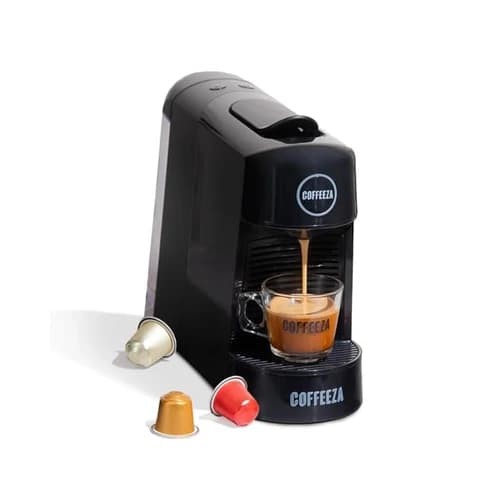
2. Coffeeza Finero Next
Every guide needs one entry that makes the expensive machines explain themselves. At ₹8,548, the Finero Next is that entry, and the machines above it do not have an easy answer.
It takes exactly the same Nespresso Original capsules as the machine above it. It runs a 20 bar pump, pours a programmable espresso and lungo, and ships with a one year warranty supported inside India.
Owners rate it 4.4 stars across 348 reviews, which is the second-deepest evidence base in this guide and identical in average to a machine costing ₹4,352 more.
Coffeeza Finero Next Pod Coffee Machine
Rated 4.4 from 348 ratings
The value pick: the same Nespresso Original capsules and the same two-button routine for a third less money, from an Indian brand that also fills the capsules.
Key details
20 bar pressure system, compatible with Nespresso Original capsules
One-touch programmable espresso and lungo buttons
Also takes Coffeeza's own capsule range
Fast heat-up system rated for an ideal brewing temperature
Switches to standby automatically after 10 minutes
One year warranty supported from within India
What we like
The best rating-to-price ratio of any machine in this guide
Sold and supported by Coffeeza directly rather than a reseller
Programmable cup volumes, so you can set your own shot length
348 reviews is a genuine evidence base at this price
Watch out for
No milk system, so milk drinks need a separate device
Build quality is plainly a step below the Nespresso machines
Brand is far less known than Nespresso if resale ever matters
There is a structural reason this machine exists, and it is worth understanding. Coffeeza's business is capsules, not hardware, so the machine is priced to put you inside its capsule range.
That is not a criticism. It is the same logic that made printers cheap, and here it works in your favour because the format is open and you are never obliged to buy Coffeeza's coffee.
Owner reviews are specific and mostly positive. The recurring praise is that the coffee is indistinguishable from the Nespresso machine a friend owns, and the recurring complaint is that the machine feels light and rattles slightly when the pump runs.
The honest limitation is longevity, and we would rather flag it than guess. This machine has a shorter market history than a Nespresso Essenza Mini, so multi-year Indian owner reports simply do not exist yet in any volume.
Buy the Finero Next if you want the cheapest sensible way into the Original format and the ₹4,352 you save matters more than brand history. It is the machine we would suggest to someone finding out whether capsule coffee suits their mornings.
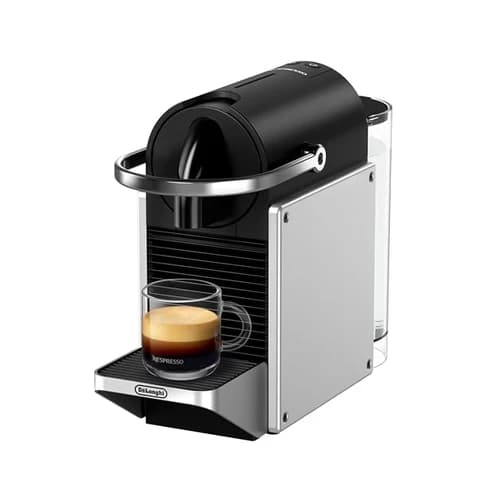
3. Nespresso Pixie EN127.S
The Pixie is the machine to buy when you have decided capsule coffee is permanent and you want the version built to survive that decision.
It is the only machine in this guide with metal side panels rather than plastic, and it is noticeably quicker to wake up, reaching brewing temperature in about twenty-five seconds.
Owners hold it at 4.4 stars across 642 reviews, which is the second-strongest evidence base here and unusually good for a machine at this price in India.
Nespresso Pixie EN127.S by De'Longhi
Rated 4.4 from 642 ratings
The one built to last: metal side panels, the fastest heat-up here, and the same 19 bar Original line extraction as the rest of the Nespresso range.
Key details
19 bar pressure system for Nespresso Original capsules
Metal side panels rather than an all-plastic body
Reaches brewing temperature in around 25 seconds
Two direct dial buttons for espresso and lungo
Eco mode powers the machine down after inactivity
Water level indicator visible from the front
What we like
The most solidly built machine in this guide
Fastest from cold, which matters on a rushed weekday
642 reviews at 4.4 stars is strong evidence at this price
Same open Original capsule format as our top pick
Watch out for
Costs ₹5,679 more than the Essenza Mini for the same coffee
0.7 litre tank is still small for a multi-cup household
The honest question about the Pixie is whether the extra money buys you better coffee, and it does not. It takes the same capsules, at the same pressure, and pours the same shot as the Essenza Mini.
What it buys is a machine that feels like an appliance instead of a gadget. Owner reports from people who have replaced a cheaper capsule machine consistently mention the metal panels and the speed rather than the flavour.
Critical reviews are mild and repetitive. The tank is small, the used-capsule bin fills faster than people expect, and a minority report the machine running loudly as it ages.
There is one Indian consideration worth adding. Small thermoblocks scale quickly, and a metal-bodied machine you plan to keep for years deserves remineralised RO water rather than hard tap water from day one.
Buy the Pixie if you already know capsules are your answer and you would rather buy once. If you are still testing the idea, the Essenza Mini does the same job for ₹5,679 less.
4. Coffeeza Lattisso Pro
Most capsule machines in India pour black coffee and stop there. The Lattisso Pro is the one credible exception left on this page, and it exists because most Indian households want milk in the cup.
It carries an integrated frother and a one-touch menu covering cappuccino, latte, espresso and lungo, running at 19 bar on the same Original capsules as everything else here.
Owners rate it 4.3 stars across 142 reviews. That is the thinnest base of our first five picks, and it reflects a recent listing rather than a troubled one.
Coffeeza Lattisso Pro One-Touch Coffee Machine
Rated 4.3 from 142 ratings
The milk machine: a built-in frother and one-touch cappuccino and latte, on the same open Nespresso Original capsule format as the rest of this guide.
Key details
19 bar pressure system, Nespresso Original compatible
Integrated milk frother with one-touch milk drinks
Cappuccino, latte, espresso and lungo on the panel
Automatic cleaning cycle for the milk path
Used-capsule ejection into an internal container
Supported directly by Coffeeza in India
What we like
The only credible one-touch milk option left in this market
Removes the second appliance a frother would otherwise need
Auto-clean makes the milk path genuinely manageable
Same open capsule format, so no supply lock-in
Watch out for
Only 142 reviews, the thinnest base of our first five picks
Milk parts still need rinsing by hand every few days
Frothed milk from a capsule machine will not pour latte art
This machine occupies a slot that emptied out while we were researching. Nespresso's own one-touch milk machine, the Lattissima One at ₹33,699, holds 3.8 stars across five reviews, and we cut it for exactly that reason.
So the Lattisso Pro is not winning a crowded fight. It is the last machine standing in a shape that Indian buyers clearly want, which is a reason to consider it and also a reason to keep expectations calm.
Owner reviews praise the convenience and the auto-clean cycle. The critical ones describe foam that is hot and pleasant rather than dense, which is what an integrated frother produces in every machine ever built at this price.
The trade worth understanding is the one every milk system asks for. Anything that touches milk needs rinsing, and owners who skip that for a few days write this machine's unhappiest reviews.
Buy the Lattisso Pro if a one-touch cappuccino is genuinely why you are buying a machine. If you drink black coffee and occasionally want milk, an Essenza Mini plus a standalone frother costs less and has far more evidence behind it.
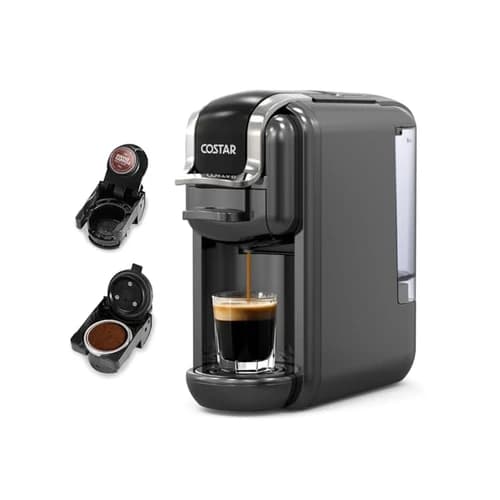
5. COSTAR 2-in-1
The COSTAR 2-in-1 answers a question the rest of this page cannot. What happens if the capsules stop being worth it?
It accepts Nespresso Original capsules or loose ground coffee, at 20 bar, for ₹7,604. It is the cheapest machine here and it holds the highest rating in this guide, 4.5 stars across 222 reviews.
That combination is unusual enough to be worth pausing on. It is the only machine on this page whose value does not depend on the capsule market staying cheap.
COSTAR 2-in-1 Capsule and Ground Coffee Machine
Rated 4.5 from 222 ratings
The hedge: one machine that takes Nespresso Original capsules or loose ground coffee, so a capsule price rise never strands it.
Key details
20 bar high-pressure extraction system
Takes Nespresso Original capsules or loose coffee powder
Brews in around 25 seconds from a fast heating system
One-touch operation with no menus to learn
Iced americano function for Indian summers
1450W heating element
What we like
The highest owner rating in this guide at 4.5 stars
Ground coffee option removes all capsule supply risk
The cheapest entry into the Original format we would recommend
222 reviews is a real evidence base at this price
Watch out for
Ground coffee mode asks you to dose and tamp, which is real work
No milk system, so milk drinks need a separate device
Sold through a reseller rather than an official brand distributor
The ground coffee side is the reason this machine is here, and it deserves a realistic description rather than a generous one. You dose the ground coffee holder yourself, tamp it and lock it in, which is genuinely more work than dropping in a capsule.
You will also not match a proper semi-automatic, because the coffee you buy pre-ground is rarely ground finely or freshly enough. What you get is a workable fallback, not a second machine.
Owner reviews are enthusiastic about the flexibility and consistent about one complaint. Several report that the capsule holder needs a firm push to seat correctly, which reads like a tolerance issue rather than a failure.
The other honest point is the sales channel. This listing comes from a reseller, so warranty service is a courier-back arrangement rather than an engineer visit, which we would weigh more heavily at ₹40,000 than we do at ₹7,604.
Buy the COSTAR if you want the cheapest way in, plus an exit from the capsule economics that does not mean buying a second machine. It is the most practical purchase in this guide, even if it is not the finest machine in it.
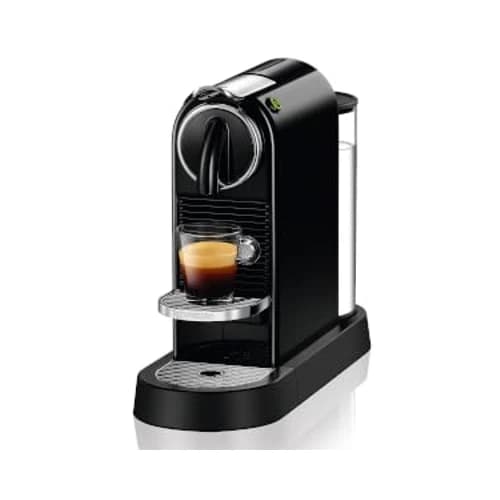
6. Nespresso CitiZ
The CitiZ is the machine people buy when the coffee machine is also furniture. It has been in Nespresso's range for years, and the square-shouldered design is the one most people picture when they picture a capsule machine.
Practically, it brings the largest water tank in this guide at one litre, a 19 bar system identical to the rest of the Original range, and a build closer to the Pixie than to the plastic entry machines.
We have to be straight about the evidence before anything else. This listing holds 4.5 stars across only 11 reviews.
Nespresso CitiZ Coffee Machine
Rated 4.5 from 11 ratings
The design piece: Nespresso's long-running square-shouldered machine, with the largest water tank here and the same open Original capsule format.
Key details
19 bar pressure system for Nespresso Original capsules
1 litre water tank, the largest in this guide
One-touch espresso and lungo with programmable volumes
Folding cup support for taller mugs
Automatic power-off after nine minutes
Sold through an authorised Indian distributor listing
What we like
The largest tank here, so far fewer refills
A genuinely handsome machine that earns counter space
Sold via an authorised distributor rather than an importer
Same open capsule format as every other pick
Watch out for
Only 11 Amazon India reviews, easily the thinnest base here
Costs ₹9,799 more than the Essenza Mini for the same coffee
Eleven reviews is not enough to conclude anything, and we would normally cut a listing on that basis alone. We kept this one, and the reasoning is worth stating so you can disagree with it.
Nespresso also sells through its own India website and boutique, so an Amazon review count only ever shows part of the picture here.
The CitiZ has been sold globally for well over a decade too, so its reputation rests on a great deal more than these eleven owners.
We searched for a better-evidenced premium capsule machine on Amazon India and there is not one. That absence is the honest state of this market rather than a gap in our research.
So treat the 4.5 figure as encouraging rather than settled, and buy the CitiZ for the tank, the build and the way it looks, which are things you can verify yourself.
If none of those move you, the Essenza Mini makes the identical cup for ₹9,799 less, and 7,249 owners have already told us how it holds up.
What is really inside a capsule
A capsule looks like packaging. It is closer to a pre-set recipe, and understanding what is sealed inside one explains both why these machines are so consistent and why you cannot fix a bad cup.
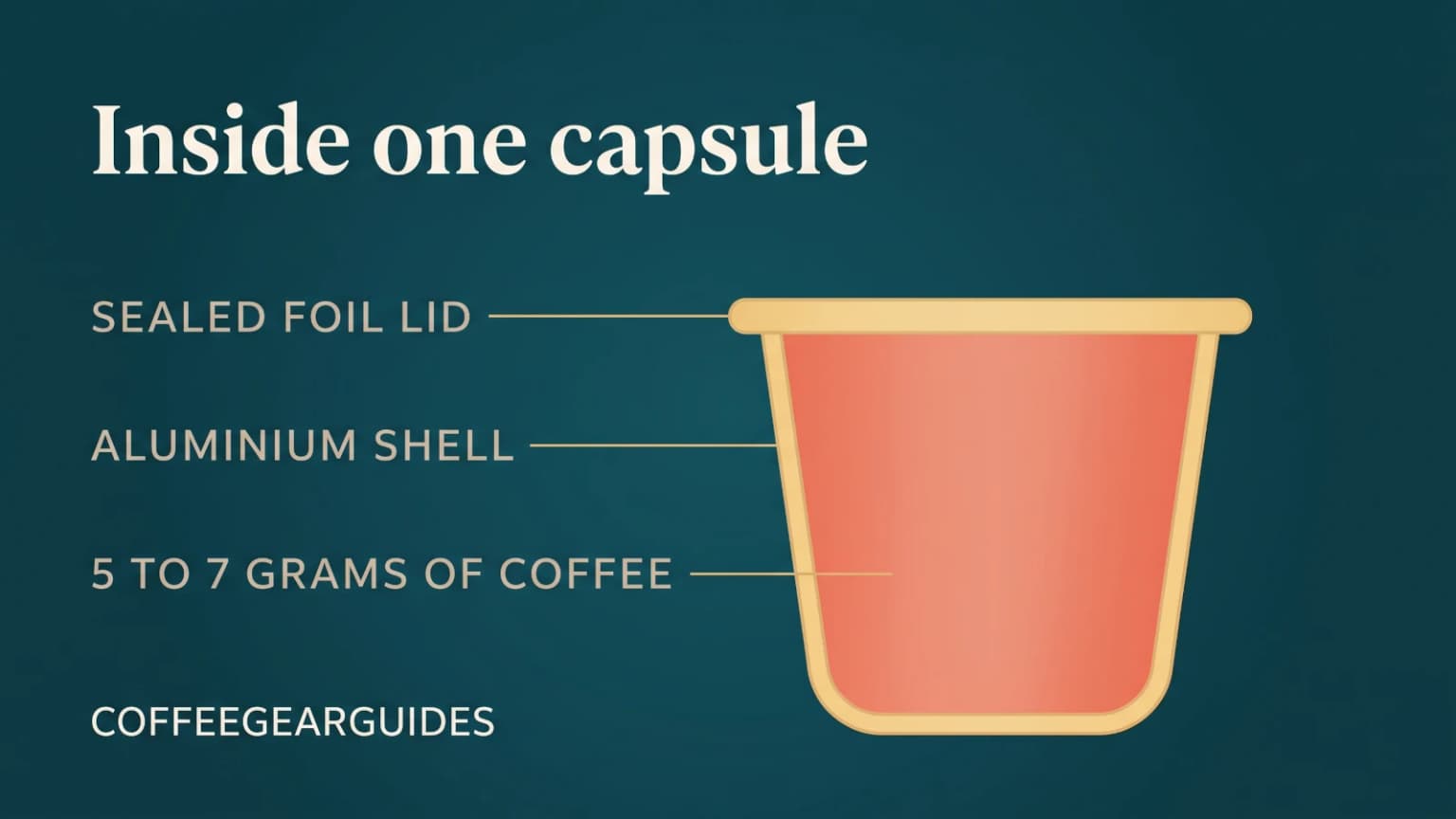
Every Nespresso Original capsule holds roughly five to seven grams of ground coffee under an aluminium shell with a foil lid. The grind size, the dose and the compression were all decided in a factory.
Five to seven grams of coffee, sealed at the factory. Everything a barista would adjust has already been decided.
The brewing sequence is the same in every machine here. Needles pierce the lid, hot water enters under pressure, the bed saturates, and the base of the capsule splits open against a plate to release the shot.
That last step is the clever part. The capsule does not have a filter; it becomes one at the moment the pressure peaks, which is why these machines produce crema without any of the usual espresso variables.
What a capsule decides for you
What a capsule decides for you
Brewing variable
On a capsule machine
On a machine with a grinder
Dose
Fixed, about 5 to 7 grams
You set it, typically 16 to 18g
Grind size
Set at the factory
Adjustable, the main control
Tamp pressure
Pre-compressed in the shell
Yours, and it takes practice
Freshness
Sealed, months of shelf life
Days after the bag opens
If the shot tastes wrong
Change capsule, nothing else
Adjust grind, dose or time
Cups before a bad one
Effectively every cup is the same
A learning curve first
This is the whole trade in one table. You are buying consistency by giving up every adjustment.
Two things follow from that table, and they matter more than any feature comparison.
First, a capsule machine has no bad days. Owner reviews here are so uniform because the machine genuinely cannot vary, which is the opposite of every coffee machine with a grinder we have researched.
Second, a capsule machine has no good days either. If a shot tastes thin or harsh, your only lever is a different capsule, because everything else was sealed shut in a factory.
The freshness point deserves one honest note. A sealed aluminium capsule protects coffee far better than an opened bag does in a humid Indian kitchen, which is a genuine advantage over careless bean storage.
It does not beat a bag of beans opened last week. It comfortably beats the same bag three weeks later, which is the more realistic comparison for most households.
Where India's capsules come from
Here is the section every competing guide leaves out, and it is the one that decides what this machine costs you.
Because Nespresso Original is an open format, several sellers compete for your daily cup in India. We priced every pod and capsule we could verify in stock, and the spread is dramatic.
What one cup actually costs in India
What one cup actually costs in India
Capsule
Pack
Price
Per cup
Blue Tokai Vienna Roast
10
₹430
About ₹43
Blue Tokai Silver Oak
10
₹450
About ₹45
Coffeeza Classico
30
₹1,427
About ₹48
Lavazza Qualità Oro
10
₹560
About ₹56
Starbucks by Nespresso
10
₹611
About ₹61
Nespresso Variety Pack
50
₹3,840
About ₹77
Nespresso Colombia
50
₹4,559
About ₹91
Nespresso Cioccolatino
10
₹985
About ₹99
Prices verified on Amazon India at the time of writing, rounded to the nearest rupee per capsule. Nespresso also sells directly through its own India website.
The top and the bottom of that table are the same product category, brewed by the same machine, and one costs more than twice the other.
Buying Nespresso's own capsules is not wrong. They are consistently roasted, the range is much wider, and some blends genuinely have no Indian equivalent.
But it is a choice, and it should be a conscious one. Over a year of two cups a day the difference between ₹43 and ₹99 a capsule is more than ₹40,000.
There is a second reason the Indian roasters are interesting, and it has nothing to do with price. Blue Tokai and Coffeeza fill their capsules with coffee grown in Karnataka, Kerala and Tamil Nadu, which most imported capsule ranges do not offer at all.
Cup size is the real fit problem
Guides in this category always tell you to measure your counter. That advice is close to useless here, because every machine on this page is small enough to sit beside a kettle.
The fit problem in an Indian kitchen is not the machine. It is the cup.
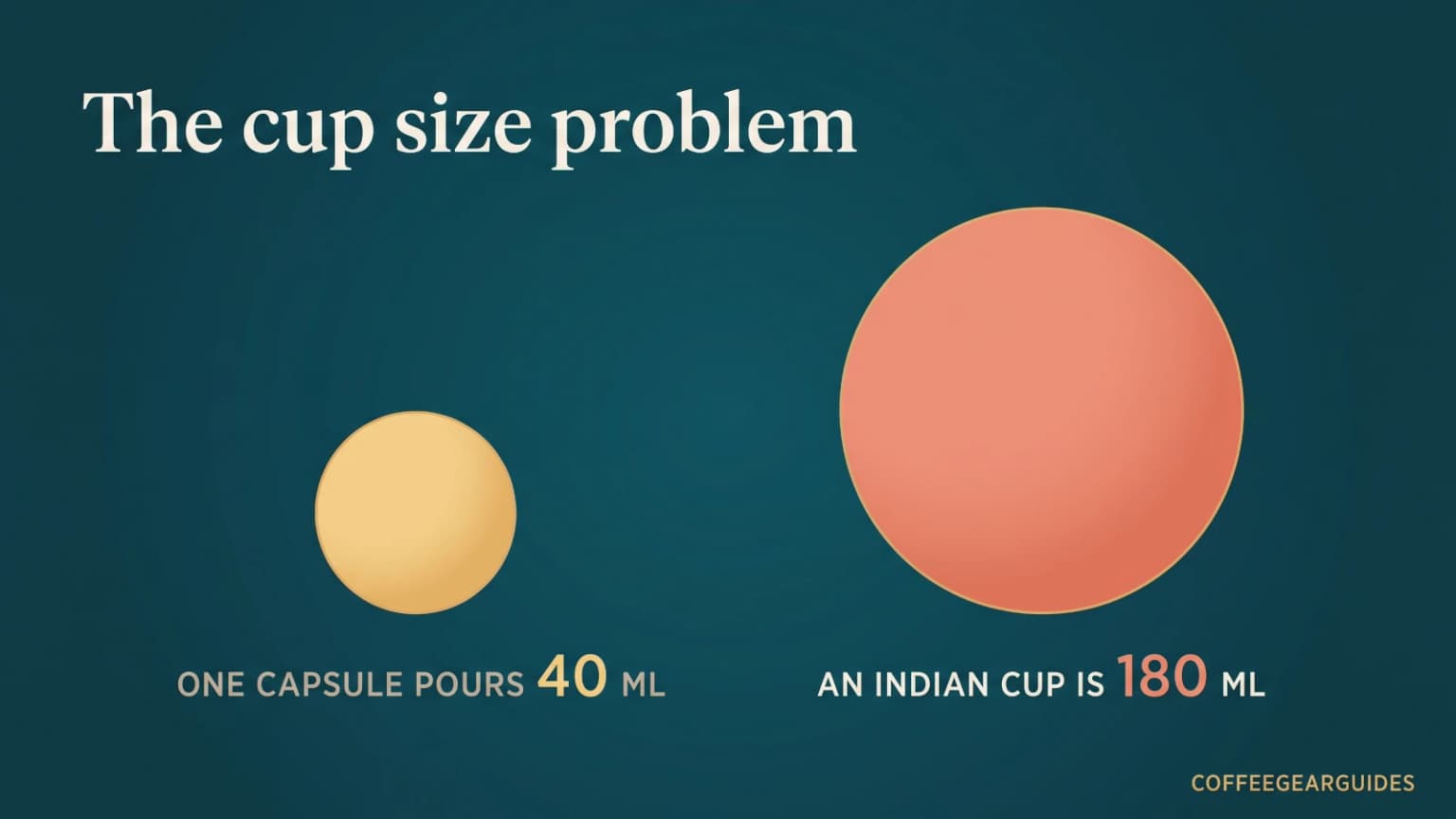
A Nespresso Original capsule is engineered to pour 25ml as a ristretto, 40ml as an espresso or 110ml as a lungo. Those are European volumes, built around European drinking habits.
The drink most Indian households actually make is a milk coffee somewhere between 150ml and 200ml, closer in size and strength to a degree coffee than to an espresso.
The capsule was designed around a 40ml habit. Most Indian cups are four times that size.
This mismatch causes more disappointment than any hardware fault. People press the lungo button, get 110ml of thin coffee, and conclude the machine is weak.
The fix is to go the other way. Pull the short 25ml or 40ml button into the cup and add hot milk to reach the volume you want, rather than asking the capsule to fill the cup with water.
That single habit is the difference between a capsule machine that disappoints and one that replaces your café order. We set out the full method below, and our coffee to water ratio guide shows the same maths on every other brewer.
Noise is worth a brief mention because it is the one thing owners consistently underestimate the other way. These machines are much quieter than any machine with a grinder in it, since there are no burrs to run.
What you hear is the pump for roughly twenty-five seconds, at about the level of an aquarium filter. If your kitchen shares a wall with a sleeping child, this is the entire category that solves that problem.
The case against a capsule machine
We would be writing marketing rather than a guide if we skipped this section, so here is the strongest argument against everything on this page.
A capsule holds five to seven grams of coffee. Buy the same roaster's coffee loose and that quantity costs you far less, because you are not paying for the aluminium, the sealing or the convenience.
The clearest example is one roaster selling the identical blend both ways. Blue Tokai's Silver Oak Cafe Blend sells as 250g of ground coffee for about ₹690, and as ten capsules for about ₹450.
At six grams a dose, that 250g pack makes roughly forty drinks, which works out near ₹17 a cup. The same coffee in a capsule is about ₹45.
The same logic runs through our guide to espresso beans in India, where Blue Tokai and Lavazza both sell the loose whole beans a grinder turns into the same drink.
You are paying somewhere near two and a half times as much for the packaging and the convenience. That is the honest number, and no amount of enthusiasm about crema changes it.
There is a second cost that does not appear on any bill. Two capsules a day is 730 pieces of aluminium a year, and there is no widely available capsule collection scheme in India today.
So most used capsules here end up in ordinary household waste. If that bothers you, it should factor into the decision now rather than in year three.
Our honest framing is this. If you want identical coffee in thirty seconds with no skill, no grinder and no mess, a capsule machine is the best answer available and nothing else is close.
If you want the best coffee per rupee, a grinder and a moka pot beat every machine on this page, and it is not particularly close either. Decide which of those sentences describes your actual mornings.
What a year of capsules costs
The sticker price is the smallest number in this decision, and treating it as the main one is how people end up surprised.
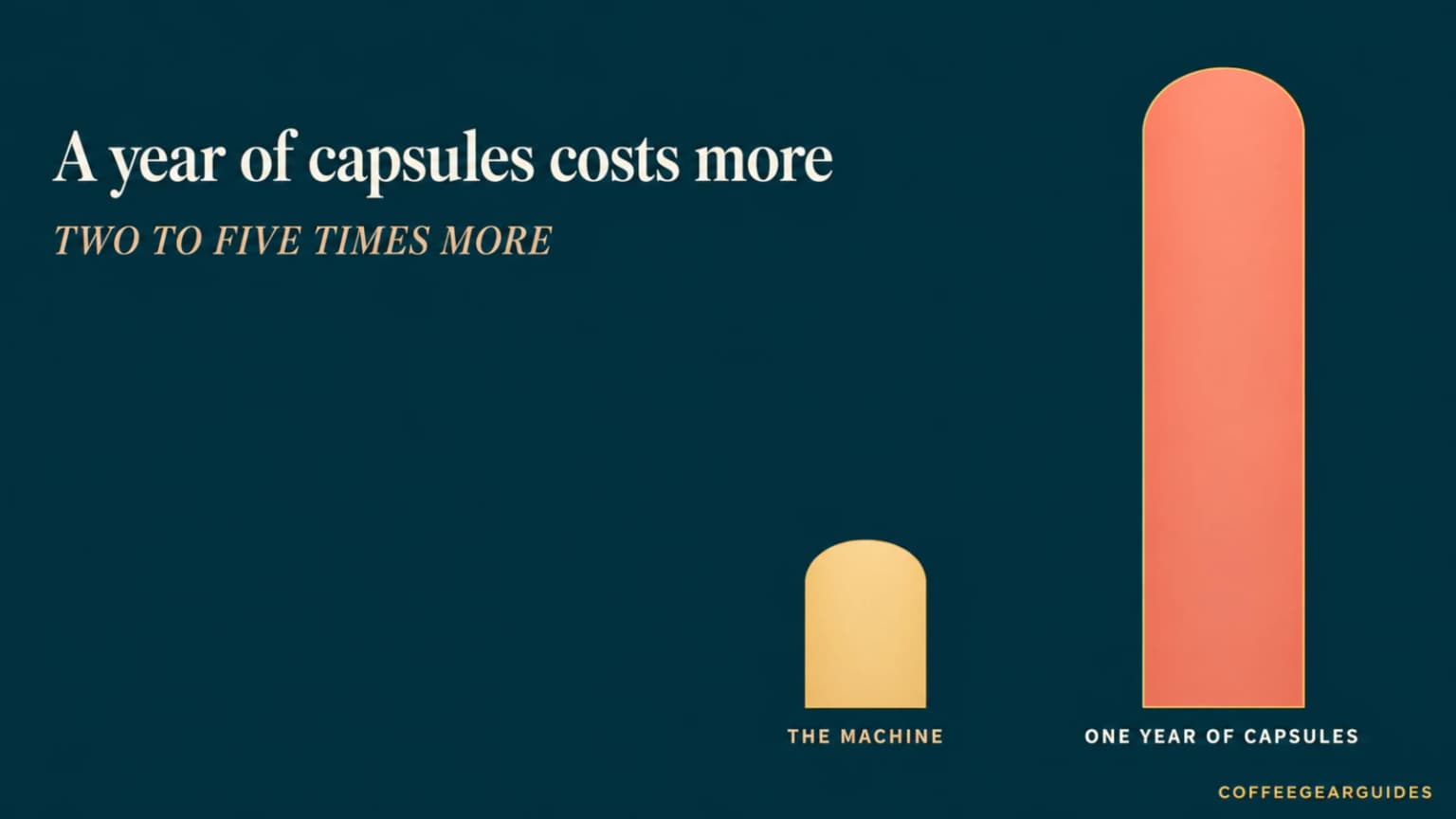
A capsule machine is closer to a subscription than an appliance. You are committing to a cost per cup for as long as you own it, and that cost passes the machine's price within months.
The machine is the short column. A year of capsules is the tall one, whichever route you take.
The arithmetic is simple enough to check yourself. Two drinks a day is about 730 capsules a year, so multiply your capsule price by 730 and compare it with the machine.
Put another way: on Nespresso's own capsules, two cups a day passes the price of an Essenza Mini in under three months. On the cheaper Indian capsules it takes about five.
A year of capsules, at two cups a day
A year of capsules, at two cups a day
What you buy
Per capsule
730 capsules
Against a ₹12,900 machine
Blue Tokai capsules
About ₹43
About ₹31,000
Roughly 2.4 times the machine
Coffeeza capsules
About ₹48
About ₹35,000
Roughly 2.7 times the machine
Lavazza capsules
About ₹56
About ₹41,000
Roughly 3.2 times the machine
Nespresso variety pack
About ₹77
About ₹56,000
Roughly 4.4 times the machine
Nespresso single sleeves
About ₹99
About ₹72,000
Roughly 5.6 times the machine
Calculated from the verified capsule prices above at 730 capsules a year. Your own figure moves with how much coffee your household actually drinks.
Two conclusions fall out of that table, and both are worth more than any feature comparison.
The gap between the cheapest and the dearest route is about ₹41,000 a year. That is more than the Essenza Mini and the Pixie put together, decided entirely by which capsule you reach for.
And every route beats a café. A cappuccino at an Indian chain runs ₹200 to ₹300, so even the most expensive capsule here is a third of that, which is genuinely why these machines pay for themselves.
Beyond capsules, running costs are small and predictable. A descaling kit once or twice a year and the occasional replacement drip tray will sit in the low hundreds of rupees.
Water is the one input that changes the machine's lifespan rather than its bill. These are small boilers, and hard Indian tap water scales them faster than the cup-count prompt expects.
When to buy
Capsule machines are seasonal merchandise in India, and the swings on Nespresso hardware are worth planning around.
The Great Indian Festival sale in October and Prime Day are when this category moves most, with Republic Day sales a distant third. Nespresso machines in particular tend to appear in bundle offers with capsule sleeves attached.
Our practical advice is unromantic. Buy the machine whenever it is discounted, because the machine is the part of this decision that barely matters.
Spend the effort on the capsule side instead. A bulk pack bought in a sale saves you more over a year than any machine discount will.
The live prices on this page update daily, so the buttons always show the current number before you commit.
Making an Indian milk coffee
A capsule machine that disappoints is almost always a capsule machine used as though it were a filter coffee maker. The correction takes about a week to learn and it changes everything.
The principle is that the capsule supplies concentrated coffee and you supply the volume. Never ask the machine to make a big cup; ask it to make a strong small one.
If you would rather the machine handled the milk as well, that is precisely what the Coffeeza Lattisso Pro is built for.
Short shot, then milk. Filling the cup with the lungo button is what makes capsule coffee taste thin.
A filter-strength milk coffee from a capsule
1
Pick an intense capsule, not a mild one
Milk flattens coffee, so a blend that tastes balanced black will disappear in a 180ml cup. Look for the higher intensity ratings in a range, or a dark roast.
Tip Intensity numbers are not comparable across brands, so judge by roast description first and the number second.
2
Warm the cup before you brew
Run the machine once with no capsule into the cup you plan to use, then tip that water away. A cold cup drops a 40ml shot several degrees before the milk arrives.
3
Pull the short button, not the long one
Use the 40ml espresso button, or 25ml if your machine offers it. This is the step almost everyone gets wrong, and it is the difference between strong coffee and coloured water.
Watch out Do not use the 110ml lungo button and then add milk. You will have diluted the coffee twice and the cup will taste hollow.
4
Heat milk to steaming, not boiling
Take full-cream or toned milk to about 65 degrees, which is hot to the touch but not simmering. Boiled milk tastes cooked and flattens whatever the capsule was doing.
Tip If you have no frother, a small pan and a whisk gets you most of the way there.
5
Pour to your own ratio and write it down
Start with 40ml of coffee to 140ml of milk for a 180ml cup. Adjust by 20ml at a time until it tastes right, then keep that ratio.
6
Use two capsules if one is never enough
If a strong capsule in a small cup still tastes weak to you, the honest answer is a double shot. It costs more per cup, and it is far better than being disappointed daily.
One Indian variable is worth naming because it catches people out. Milk here is usually toned or full-cream cow milk, and buffalo milk appears in plenty of households.
Higher fat milk carries flavour better and needs slightly less of it to satisfy, so a cup that works with toned milk may taste heavy with buffalo milk. Adjust the ratio rather than the capsule.
If you want the same drink cold, brew the short shot straight over ice and add chilled milk. Capsule coffee makes a genuinely good cold coffee, and in an Indian summer that is not a footnote.
The COSTAR 2-in-1 goes one better and lists a dedicated iced americano setting, which is a rare thing at its price.
Keeping a capsule coffee machine clean
Maintenance in this category is unlike every other coffee machine we have researched, and mostly in your favour. There are no burrs to brush and no brew group to pull out.
What you have instead is a piercing needle, a used-capsule bin, and a small boiler that scale will eventually close up. Three things, and only one of them is urgent.
The capsule machine routine
1
After each session: empty the bin and tray
Used capsules hold hot water and coffee, and a full bin is where the smell in a capsule machine comes from. Tip it out and rinse the drip tray.
Tip Most bins hold around ten capsules, which is far fewer days than people assume in a two-person household.
2
Weekly: flush the machine with water
Run one full lungo cycle with no capsule in the holder. It clears coffee oils out of the brew path and takes twenty seconds.
3
Weekly: wipe the capsule holder
Lift the lever, look inside, and wipe the seat and the piercing needle with a damp cloth. Grounds collect around the needle and eventually cause weak, off-centre shots.
Watch out Never poke the needle with anything metal. A bent piercing needle is one of the few faults on these machines that cannot be fixed at home.
4
If you use milk: rinse it immediately
On a machine with a frother, run the cleaning cycle and rinse the milk parts straight after the last drink rather than after breakfast.
Tip Milk residue is dramatically harder to shift once it has dried, and it is the most skipped step in every owner review we read.
5
Every two to six months: descale
Use the manufacturer descaling solution and follow the cycle in the manual. Go by your water rather than the machine prompt: every two to three months on hard tap water, four to six on remineralised RO.
Watch out Vinegar is aggressive towards the seals in these machines. Use a proper descaler, not a kitchen remedy.
The pattern across critical reviews in this category is consistent, and it is avoidable. Machines described as broken were very often machines that had never been descaled in a hard-water city.
A small thermoblock scales faster than the large boiler in a bean-to-cup machine, so this is not a chore you can defer the way you might on a bigger appliance. Ten minutes twice a year is the whole commitment.
Which capsule machine should you buy in 2026?
Six machines is a shortlist, not an answer. So here is ours in plain terms: for most people the best capsule coffee machine in India is the Nespresso Essenza Mini.
We weighed owner evidence, capsule format, build, milk capability and the running cost each machine locks you into. Then we asked the question that separates them: how much certainty do you want, and do you need milk from the machine itself?
The three we recommend first
Our pick
Essenza Mini
₹12,900
You are
Buying the safest bet
Best at
Proven, repeatable coffee
Evidence
4.4 stars, 7,249 owners
Weak spot
No milk system
Coffeeza Finero Next
₹8,548
You are
Testing the idea
Best at
Same capsules, less money
Evidence
4.4 stars, 348 owners
Weak spot
Short market history
Coffeeza Lattisso Pro
₹16,243
You are
A cappuccino household
Best at
One-touch milk drinks
Evidence
4.3 stars, 142 owners
Weak spot
Thin evidence base
The three we recommend first
Specification
Our pick
Essenza Mini
₹12,900
Coffeeza Finero Next
₹8,548
Coffeeza Lattisso Pro
₹16,243
You are
Buying the safest bet
Testing the idea
A cappuccino household
Best at
Proven, repeatable coffee
Same capsules, less money
One-touch milk drinks
Evidence
4.4 stars, 7,249 owners
4.4 stars, 348 owners
4.3 stars, 142 owners
Weak spot
No milk system
Short market history
Thin evidence base
Whichever machine you choose, spend an evening on the capsule side before you spend anything on hardware. That is where the money in this category actually goes, and it is the one part of the decision you can still change later.
A machine that suits your actual mornings gets used every day for years. Daily use is where anything in the coffee makers category finally justifies its price.
Frequently asked questions
Is a capsule coffee machine worth it in India?
It is worth it if you value a fast, identical cup every morning and you have accepted what the capsules will cost you. The machine is the small purchase here.
At two drinks a day you will buy around 730 capsules a year. On Indian third-party capsules that is roughly ₹31,000, and on Nespresso own-brand capsules it is closer to ₹56,000.
Both figures are far more than any machine on this page costs. If that maths does not bother you, a capsule machine is the least demanding way to get consistent coffee in an Indian kitchen.
Are third-party capsules safe to use in a Nespresso machine?
Nespresso Original machines accept third-party capsules, and Indian roasters including Blue Tokai, Coffeeza and Lavazza sell them openly. The format is not locked the way the Vertuo one is.
The practical caution is quality rather than legality. A badly made capsule can leak grounds into the brew chamber or deform in the holder, which is a cleaning problem rather than a broken machine.
Buy from roasters who make aluminium capsules rather than thin plastic ones, and keep the machine's own descaling schedule regardless of whose coffee you use.
How much does one coffee capsule cost in India?
At the time of writing, Nespresso own-brand Original capsules on Amazon India work out between roughly ₹77 and ₹99 each depending on the blend and pack size.
Third-party capsules that fit the same machines are far cheaper. Blue Tokai runs about ₹43 to ₹45, Coffeeza about ₹48, Lavazza about ₹56 and Starbucks by Nespresso about ₹61.
That spread is the single largest number in this decision. Choosing the cheaper side saves more in a year than the price of most machines on this page.
Can I use Nespresso Vertuo capsules in India?
You can, but you should understand what you are signing up for before you buy a Vertuo machine here. Vertuo is a closed format, so Nespresso is effectively your only supplier.
Indian availability reflects that. When we checked the listings for this guide, six of the seven Vertuo machines we found on Amazon India were out of stock, and prices across that family ranged from ₹21,000 to over ₹64,000.
Original line machines take capsules from a dozen sellers, including Indian roasters. That is why every Nespresso machine we recommend here is an Original line one.
Do capsule coffee machines make real espresso?
They make a genuine pressure-extracted shot with crema, so yes in the technical sense. A 19 bar pump forcing hot water through five to seven grams of ground coffee sealed in a pod is what an espresso machine does.
What you give up is control. The dose, the grind and the tamp were all decided in a factory months ago, so you cannot adjust anything if the shot runs sour or harsh.
A well-dialled semi-automatic beats any capsule. A capsule beats a badly dialled semi-automatic every single morning, which is why so many people quietly prefer them.
How often should I descale a capsule coffee machine in India?
More often than the manual suggests if you live in a hard-water city. Delhi NCR, Chennai, Hyderabad, Jaipur and much of the Deccan will scale a small boiler quickly.
A practical rule is every two to three months on hard tap water, and every four to six months on remineralised RO water. The machines prompt you on a cup count, which does not know what your water is like.
Filling the tank with remineralised RO water rather than straight tap water does more for the machine's life than any cleaning product you can buy.